
How to build an AI that finds Trading Strategies with GPT-6 Astra
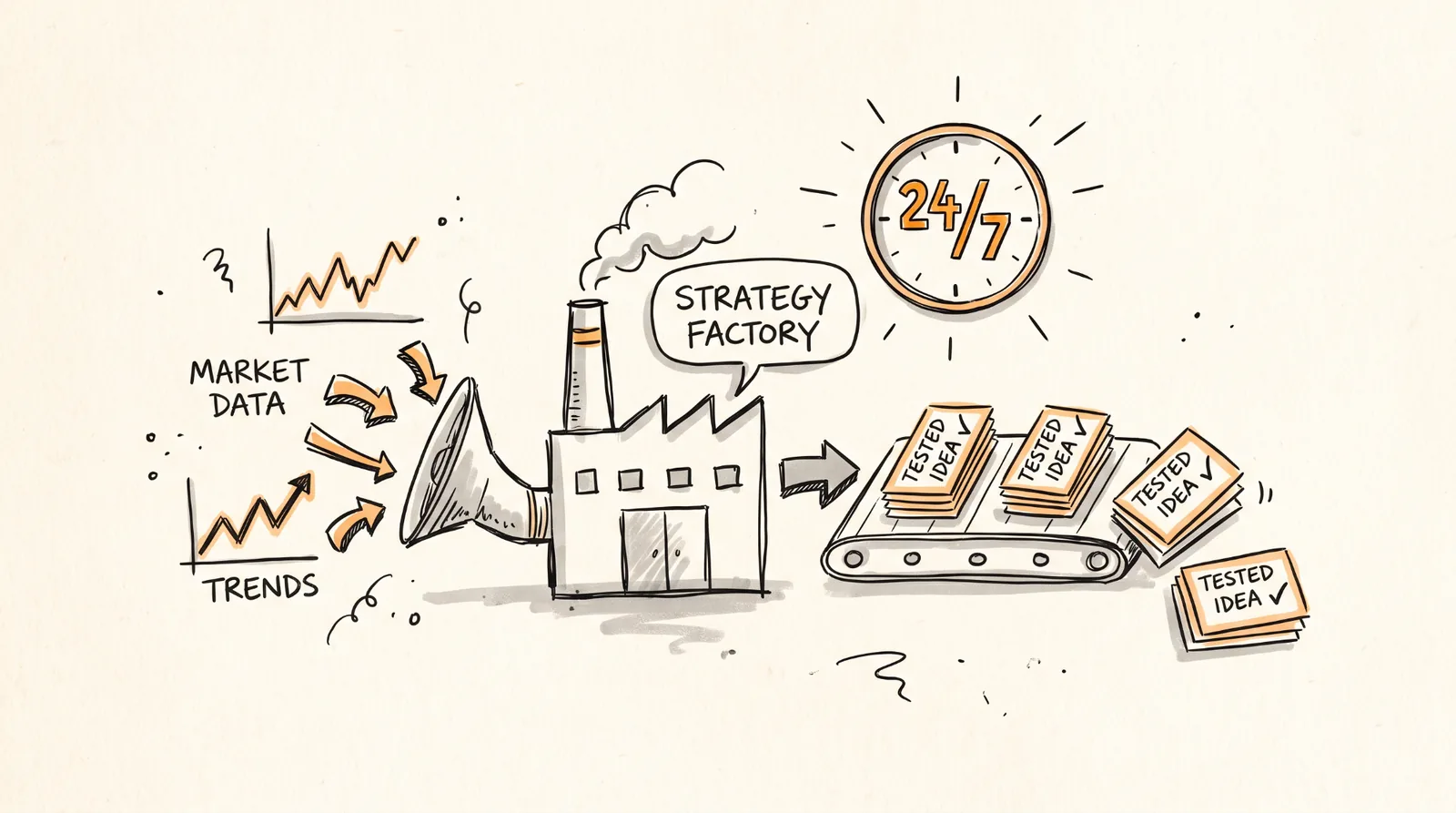
Hedge funds don't win because they found one magic strategy. They win because they have a machine that keeps finding new ones. In this guide I'll show you how to build your own version of that machine with GPT-6 Astra: it watches the markets around the clock, comes up with strategy ideas, tests them against years of data, and pings your phone on Telegram when one passes. You'll get the four kinds of opportunities quant funds hunt for, the two-AI setup that keeps it affordable, the 8-bot team you run by just texting it, and every prompt and line of code you need. You can have the first version running this weekend.
Before anything else: this is for research and learning, not financial advice. Trading is risky. Run everything on paper first, and never trade money you can't afford to lose.
Don't want to figure this out alone? I walk members through every step inside the community. Join the Skool → skool.com/raycfu
HOW HEDGE FUNDS ACTUALLY MAKE MONEY
Here's the thing most people don't get about firms like Renaissance Technologies. They're not running one genius strategy. They're running thousands of small ones at the same time.
Every strategy has an expiration date. Once enough traders spot the same edge, it stops working. Quants call that alpha decay. So the real advantage is a pipeline that keeps producing new strategies faster than the old ones die.
The math these funds use isn't secret. It's in published papers. What kept regular people out was the setup around it: a research team, a testing engine, live monitoring, and something running 24/7. That used to cost anywhere from $2 million to $50 million a year.
The article this guide is based on estimates you can now run a version of it for about $300 to $500 a month.
WHY GPT-6 ASTRA CHANGES THIS
OpenAI released GPT-6 Astra on September 3, 2026. Greg Brockman, OpenAI's president, said it "could eventually be seen as the arrival of AGI," and Jensen Huang said it was trained on more than 100,000 of NVIDIA's Grace Blackwell systems.
For this project, four things matter:
It can use a computer. OpenAI's tagline at launch was "Anything you can do on a computer, Astra can do for you. Fast." That means it can pull up broker platforms and exchange APIs, read SEC filings, grab order book data, and look up insider trades.
It has a huge memory. About one million tokens in one session, which is roughly 750,000 words. It can look at a whole day of prices, filings, and options activity at once instead of summaries.
It can work for hours. Come up with an idea, write the code, test it, read the results, improve it, all in one run without you touching it.
It thinks like a quant. Older models needed you to give them the strategy. Astra can look at the data and propose one on its own.
It costs $10 per million tokens going in and $50 per million coming out.
THE 4 OPPORTUNITIES QUANT FUNDS HUNT
Every strategy your system finds will fall into one of these four buckets.
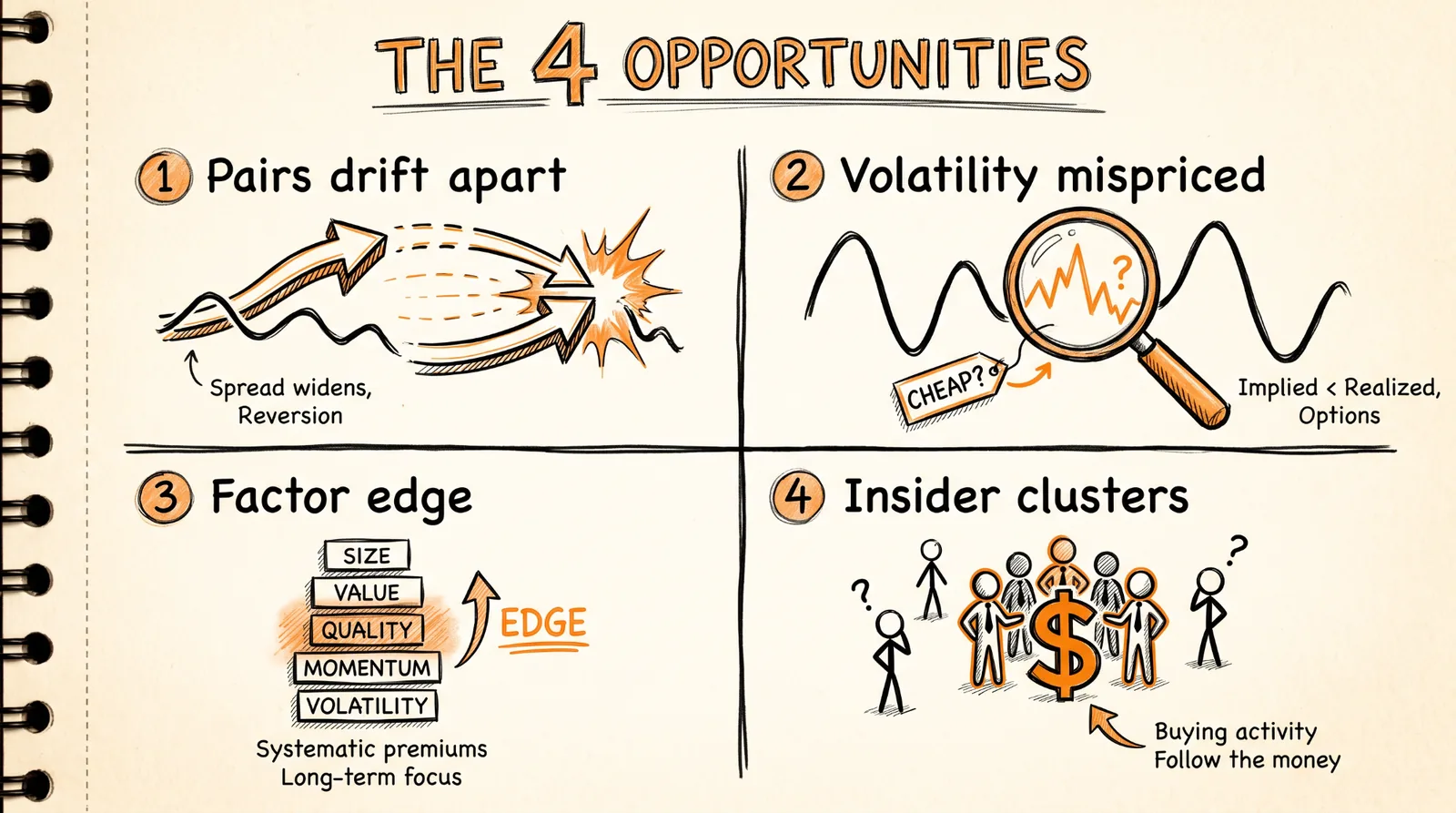
1. Pairs that split up (statistical arbitrage)
Some stocks basically move in lockstep. When one suddenly jumps and its partner doesn't, that gap is an opportunity.
Think Coke and Pepsi. If Coke spikes and Pepsi doesn't follow, you short Coke and buy Pepsi, then close both once they line back up.
The math behind it is called Ornstein-Uhlenbeck mean reversion:
dX(t) = θ(μ − X(t))dt + σ dW(t)
In plain English: X is the gap between the two stocks, μ is where that gap normally sits, θ is how fast it snaps back, σ is how jumpy it is, and dW is random noise. When the gap stretches far from normal, you bet it snaps back. The faster it snaps back, the better the trade.
This whole field traces back to Engle and Granger's 1987 paper, "Co-Integration and Error Correction."
2. Options priced wrong (volatility mispricing)
Options are priced on how much people think a stock will move. When that guess is way off from how much it's really moving, there's a gap to trade.
Say Tesla's options are priced like the stock will swing 4% a day, but it's only been swinging 2%. Those options are overpriced, so you sell them and profit as they lose value over time.
The math is the Heston model, which treats volatility as something that changes on its own:
dv(t) = κ(θ − v(t))dt + ξ√v(t) dW(t)
v is the current variance, θ is its long-run level, κ is how fast it drifts back, ξ is how much volatility itself bounces around, and dW is noise. It comes from Steven Heston's 1993 paper, and options desks all over Wall Street use it or something like it.
Big warning on this one: selling options can lose you way more than you collected if the stock makes a huge move. Strict limits are a must.
3. Returns nobody can explain (factor anomalies)
You can break any stock's return into pieces: how much came from the whole market going up, from the company being small, from it being cheap, from it being profitable, and from how it invests. Whatever's left over after all that is alpha.
That's the Fama-French five-factor model:
R(i) − R(f) = α + β(R(M) − R(f)) + s·SMB + h·HML + r·RMW + c·CMA + ε
R(i) is the stock's return, R(f) is the risk-free rate, R(M) is the market's return, and SMB, HML, RMW, and CMA stand for size, value, profitability, and investment style. α is the leftover you're hunting for, and ε is noise.
Example: Apple gains 15% in a quarter, but those five factors only explain 10%. That extra 5% is unexplained. If it keeps showing up, it's worth trading.
4. Executives buying their own stock (insider clusters)
Executives have to report when they buy or sell their own company's stock. When a bunch of them buy around the same time, that's called cluster buying, and it often means they think good news is coming.
The article points to Cohen, Malloy, and Pomorski's 2012 paper "Decoding Inside Information" for a 5.3% yearly outperformance from this pattern, and flags it with this score:
Cluster Score = (insiders buying within 5 days) × (total dollars bought) / (average daily insider volume)
Anything above 3.0 counts as a signal.
Those are your four buckets. The system watches all of them nonstop.
THE TRICK THAT KEEPS IT CHEAP: TWO AIs, TWO JOBS
If you made Astra watch hundreds of markets all day, you'd be spending thousands of dollars a day. So you split the work.
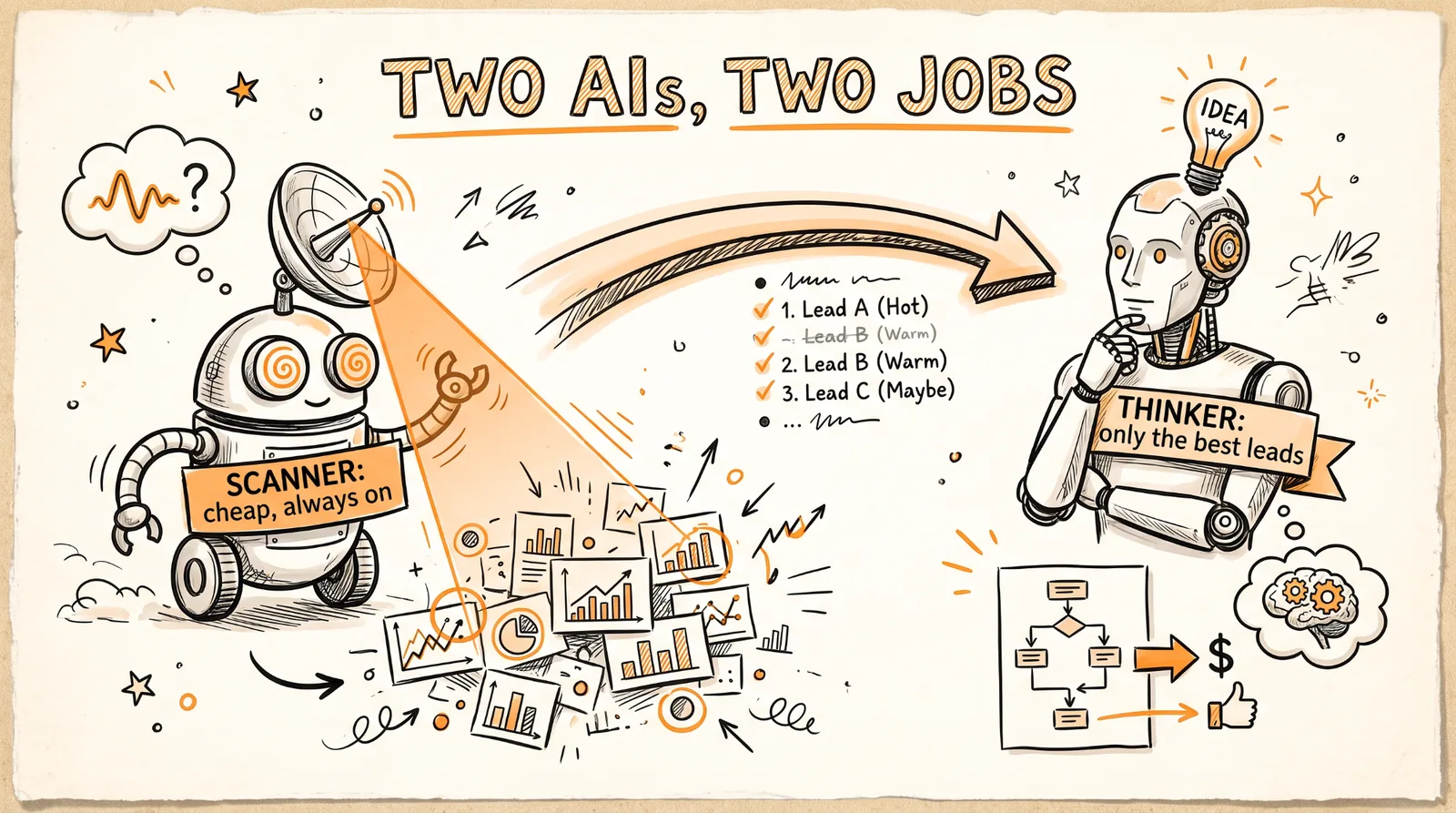
The scanner: Kimi K3 Swarm Max. Moonshot AI released Kimi K3 in July 2026. It's a 2.8 trillion parameter model with a one million token memory per agent, and the Swarm Max version can run up to 300 helper agents at once, each watching its own market. It costs $3 per million tokens in and $15 per million out, about a third of Astra's price. It also has built-in scheduling, remembers its own code across long sessions, and the Kimi Work desktop app comes with US, Hong Kong, and China A-share market data.
The scanner's whole job is to cut thousands of raw signals down to the handful actually worth a look.
The thinker: GPT-6 Astra. It only looks at what the scanner hands it. That's what keeps the bill down.
All in, the article puts this at roughly $300 to $500 a month.
YOUR 8-BOT TEAM
You run everything through Grok Bot. Every bot you create shares the same cloud computer, so they can pass work to each other, and you just message them like you would a coworker. Here's the team:
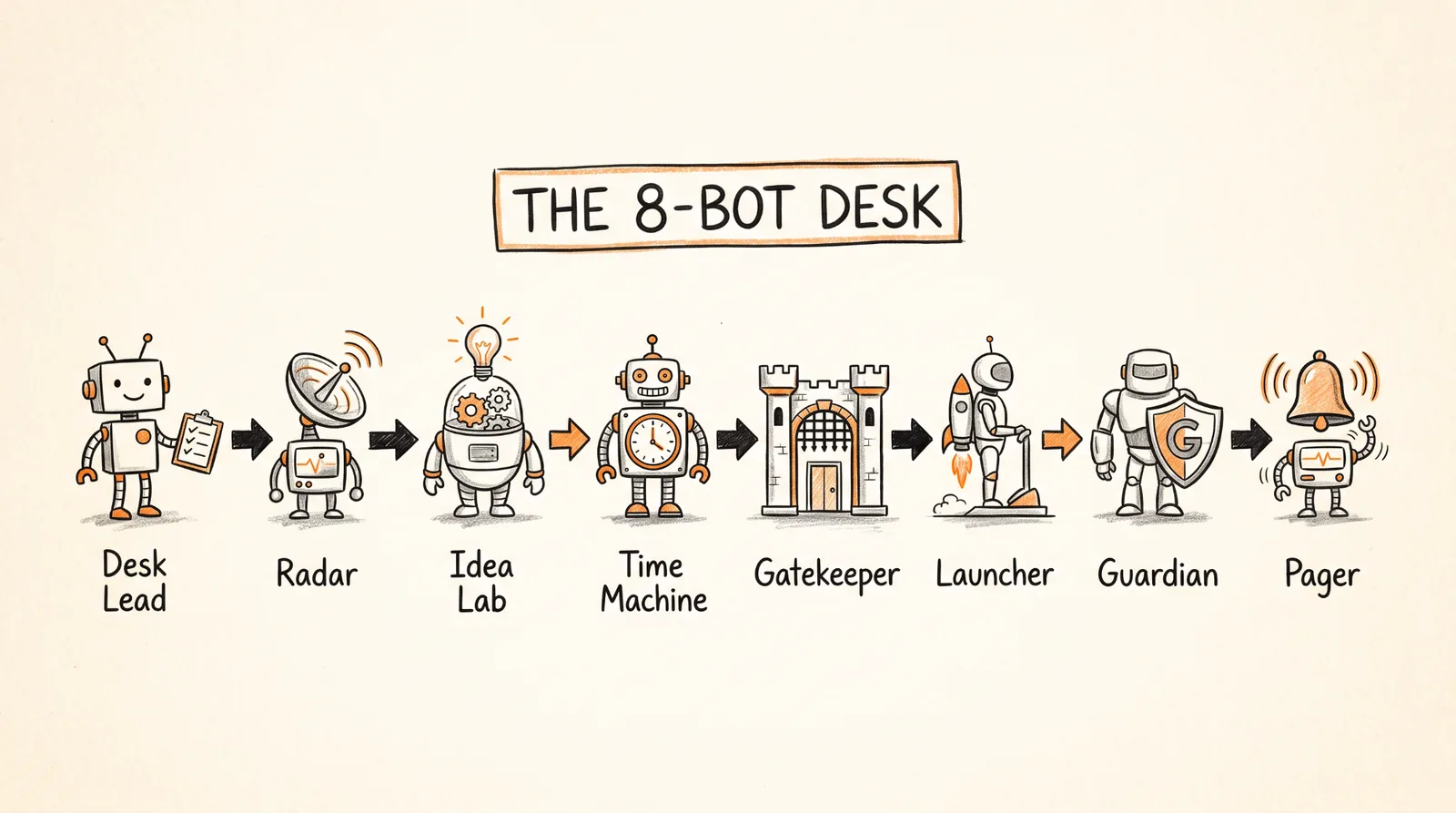
1. The Desk Lead. Your only point of contact. You tell it what you want, and it hands the work to the right bot.
2. The Radar. Runs on Kimi K3 Swarm Max and manages all the helper agents watching the markets.
3. The Idea Lab. Runs on GPT-6 Astra. Takes what the Radar finds and turns it into strategy ideas.
4. The Time Machine. Runs on GPT-6 Astra. Replays each idea against years of real market data.
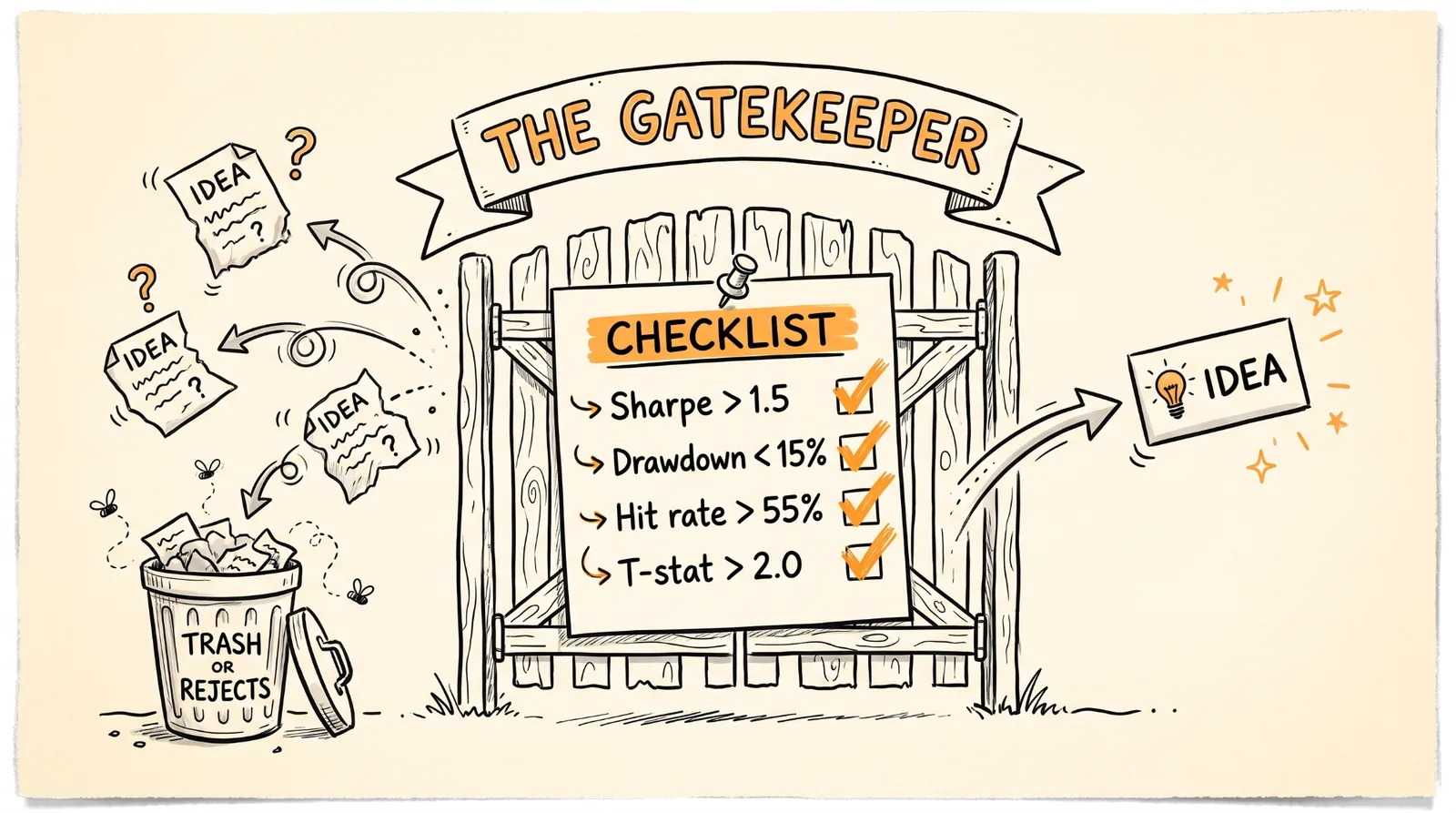
5. The Gatekeeper. Runs on GPT-6 Astra. Only lets through strategies that hit your performance bar.
6. The Launcher. Sends approved strategies to a paper trading account, or a live one once you're ready.
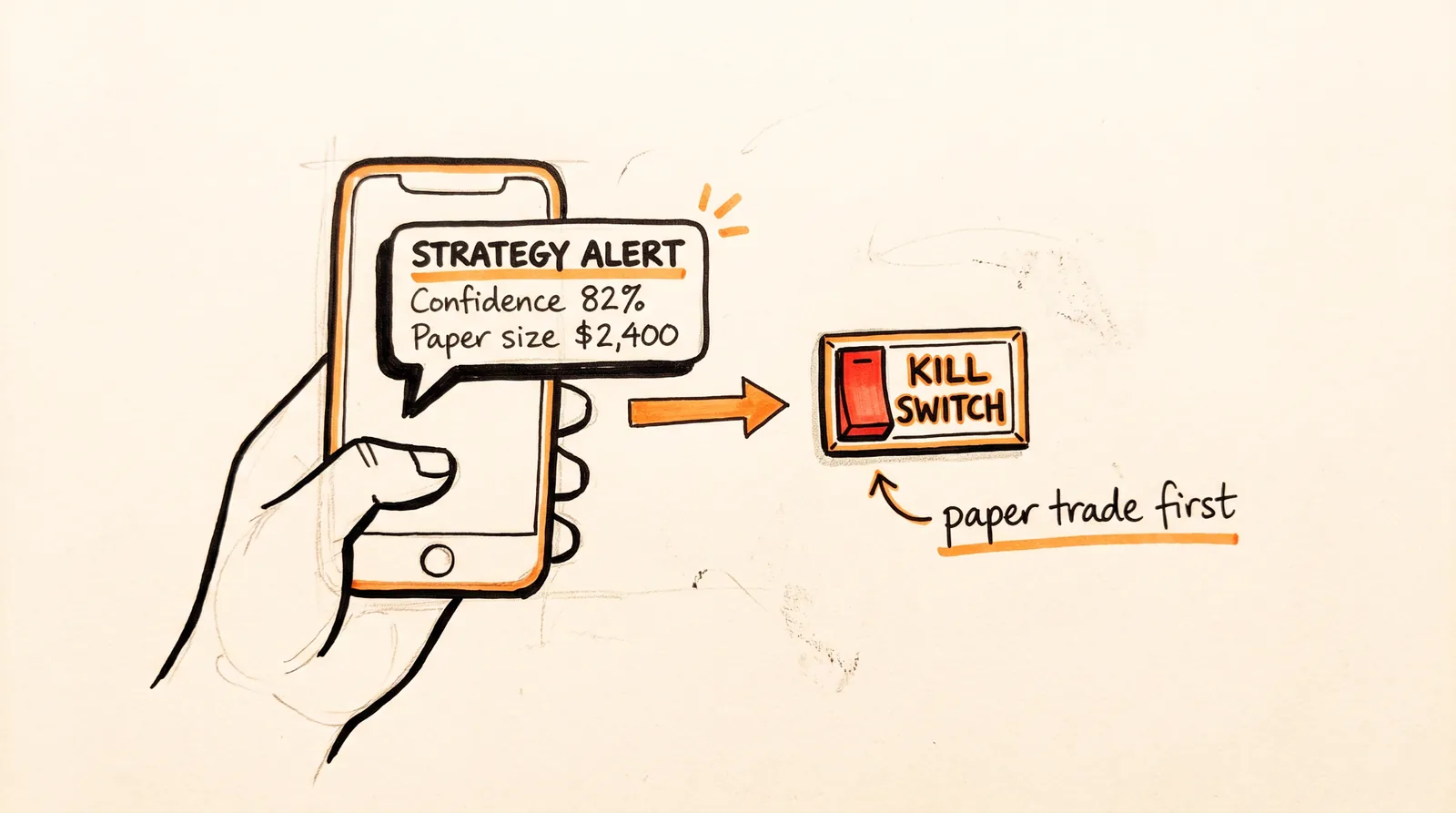
7. The Guardian. Watches risk and can shut everything down. It doesn't negotiate.
8. The Pager. Texts you on Telegram the moment an approved strategy fires.
Every Telegram alert tells you what to look at, which bucket it came from, how many sources backed it up, how it did in testing, how long you have to act, and how big the position would be. Something like:
🚨 STRATEGY ALERT
Market: HYPE-PERP
Type: Pairs split (stat arb)
What happened: broke its usual pattern vs SOL-PERP
Confidence: 87%
Confirmed by: 3 sources
Tested Sharpe: 2.1
Worst drawdown: 8.3%
Act within: 15 minutes
Paper size: $2,400
And you change everything just by texting the Desk Lead. For example:
Start watching for price gaps between Binance and Hyperliquid on the same coins. Only flag gaps of 0.25% or more, and send me a Telegram alert when one shows up.
The Desk Lead tells the Radar to start watching, tells the Idea Lab to include it, and updates the Pager. Next scan, it's live. No config files to touch.
WHAT YOU NEED
SuperGrok Heavy from grok.com, for Grok Bot.
ChatGPT Pro from chatgpt.com/pro, plus API access at platform.openai.com, for GPT-6 Astra.
Kimi Work from kimi.com, for Kimi K3 Swarm Max. It runs on Apple silicon Macs and Windows.
Telegram on your phone.
Python, and these data sources: yfinance for US stocks, CCXT for crypto, polygon.io for options, and SEC EDGAR for insider trades.
A free weekend.
THE BUILD, STEP BY STEP
STEP 1: SET UP YOUR DESK IN GROK BOT
Sign up for SuperGrok Heavy at grok.com and download the Grok Bot desktop app. Then make these folders on the shared computer. This is how the bots hand work to each other:
/desk/leads/ what the Radar finds
/desk/ideas/ strategy ideas from the Idea Lab
/desk/tests/ backtest results
/desk/approved/ strategies that passed the Gatekeeper
/desk/live/ strategies the Launcher is running
/desk/alerts/ what the Pager has already sent
/desk/settings/ keys, limits, and the kill switch
STEP 2: HOOK UP GPT-6 ASTRA
Get ChatGPT Pro at chatgpt.com/pro so you have GPT-6 Astra. Then turn on API access at platform.openai.com and save your key in /desk/settings/openai.env.
Point the Idea Lab, Time Machine, and Gatekeeper at the gpt-6-astra model. Use Fast mode (it costs 2x) for those three, because when an opportunity only lasts 15 minutes, speed matters.
STEP 3: SET UP KIMI WORK
Download Kimi Work from kimi.com, sign in with a Moonshot account, and switch on K3 Swarm Max in Settings. Turn on cloud sync so Kimi Work shares the same /desk folders as Grok Bot, and turn on the US, Hong Kong, and A-share market data.
STEP 4: MAKE YOUR TELEGRAM BOT
1. In Telegram, search for @BotFather.
2. Send it /newbot and pick a name for your bot.
3. Copy the token it gives you.
4. Message @userinfobot to get your chat ID.
5. Send your new bot any message so it's allowed to text you back.
6. Save both in /desk/settings/telegram.env:
TELEGRAM_BOT_TOKEN=paste_your_token
TELEGRAM_CHAT_ID=paste_your_chat_id
STEP 5: HAVE ASTRA BUILD THE IDEA LAB
Open ChatGPT Pro and send Astra this:
I need a Python program that turns market signals into trading strategy ideas, running nonstop.
Every 60 seconds, read:
- /desk/leads/latest.json for new signals from my scanner
- /desk/settings/allowed-strategies.json for the strategy types I allow
- /desk/tests/history.json for how past ideas performed
For each signal, come up with one or more ideas from these four types:
1. Pairs trading using Ornstein-Uhlenbeck mean reversion
2. Mispriced options using the Heston volatility model
3. Unexplained returns using the Fama-French five-factor model
4. Insider cluster buying based on Cohen, Malloy, and Pomorski (2012)
Save each idea as /desk/ideas/{id}.json with:
- a unique id
- the strategy type
- the market or ticker
- the entry rule and exit rule, written as Python code that can run
- the position size, using a quarter of the Kelly formula to stay conservative
- the expected Sharpe ratio, based on similar past strategies
- a risk score from 0 to 100
Rules:
- If /desk/settings/kill-switch.txt says STOP, shut down right away.
- No more than 3 ideas of the same type per round.
- Never repeat a strategy that's already in /desk/live/.
Astra writes the whole program for you.
That kill switch is your emergency brake. Type STOP in that file and anything checking it stops immediately.
STEP 6: HAVE ASTRA BUILD THE TIME MACHINE AND THE GATEKEEPER
Send Astra this:
Now I need a backtesting program that tests every idea in /desk/ideas/ against real history.
Pull data from:
- yfinance: 5 years of daily prices for US stocks
- CCXT: 1 year of hourly prices for crypto perpetuals
- polygon.io: options activity for stock options
- SEC EDGAR: past insider filings
Run each idea's entry and exit rules on that data, and measure:
- the yearly Sharpe ratio
- the biggest drop from a peak (max drawdown)
- the win rate
- how long trades are usually held
- the t-statistic on the leftover alpha
Save results to /desk/tests/{id}.json.
Then build a Gatekeeper that reads every result and only approves strategies that clear the bars in /desk/settings/gatekeeper.json. Start with: Sharpe above 1.5, drawdown below 15%, win rate above 55%, and t-stat above 2.0. Save approved ones to /desk/approved/{id}.json with a confidence percentage. For rejected ones, write down why they failed.
Include realistic trading costs, and save the most recent stretch of data for a final test that strategies are never built on.
What those bars mean:
Sharpe above 1.5: the returns are worth the bumps along the way.
Drawdown under 15%: it never fell more than 15% from its high in testing.
Win rate above 55%: it wins more than it loses.
T-stat above 2.0: the results probably aren't just luck.
I added that last line about trading costs and a final untouched test period on purpose. When you test a lot of strategies, some will look great purely by chance. Testing on data the strategy never saw is how you catch those.
STEP 7: TURN ON THE RADAR
In Kimi Work, create a routine called radar.
Run it 24/7 for crypto, and 9:30 AM to 4 PM Eastern for US stocks.
Have it run these helper agents in parallel:
60 watching order books for the 500 most-traded US stocks
40 watching Hyperliquid perpetual pairs
40 watching Polymarket prediction markets
40 watching for unusual options activity (more than 3x normal volume)
40 watching SEC Form 4 insider filings
40 watching key X accounts (Fed governors, Trump's Truth Social, company CEOs)
40 watching the economic data calendar
Whenever an agent spots something (a pair breaking apart, a burst of insider buying, a volatility spike, or strange options activity), it adds it to /desk/leads/latest.json. The Idea Lab checks that file every 60 seconds.
Heads up: platforms like Hyperliquid and Polymarket aren't available everywhere. Check what's allowed where you live.
STEP 8: TURN ON THE PAGER
Save this as /desk/pager.py:
import json
import os
import time
from pathlib import Path
import requests
TOKEN = os.environ["TELEGRAM_BOT_TOKEN"]
CHAT_ID = os.environ["TELEGRAM_CHAT_ID"]
APPROVED = Path("/desk/approved")
SENT_LOG = Path("/desk/alerts/sent.json")
MIN_CONFIDENCE = 75
CHECK_EVERY = 30
def already_sent():
if SENT_LOG.exists():
return set(json.loads(SENT_LOG.read_text()))
return set()
def remember(sent):
SENT_LOG.parent.mkdir(parents=True, exist_ok=True)
SENT_LOG.write_text(json.dumps(sorted(sent)))
def build_message(s):
lines = [
"🚨 STRATEGY ALERT",
f"Market: {s.get('instrument', '?')}",
f"Type: {s.get('category', '?')}",
f"What happened: {s.get('signal_description', '?')}",
f"Confidence: {s.get('confidence_percent', 0)}%",
f"Confirmed by: {s.get('confirmation_count', 0)} sources",
f"Tested Sharpe: {s.get('sharpe', 0):.1f}",
f"Worst drawdown: {s.get('max_drawdown', 0):.1%}",
f"T-stat: {s.get('t_stat', 0):.1f}",
f"Act within: {s.get('window_minutes', '?')} minutes",
f"Paper size: ${s.get('suggested_dollar_size', 0):,.0f}",
f"Kelly fraction: {s.get('kelly_fraction', 0):.2f}",
f"Time: {s.get('timestamp', '?')}",
]
return "\n".join(lines)
def send(text):
url = f"https://api.telegram.org/bot{TOKEN}/sendMessage"
try:
reply = requests.post(url, json={"chat_id": CHAT_ID, "text": text}, timeout=10)
return reply.ok
except requests.RequestException:
return False
def run():
while True:
sent = already_sent()
for path in sorted(APPROVED.glob("*.json")):
strategy = json.loads(path.read_text())
strategy_id = strategy.get("strategy_id", path.stem)
if strategy_id in sent:
continue
if strategy.get("confidence_percent", 0) < MIN_CONFIDENCE:
continue
if send(build_message(strategy)):
sent.add(strategy_id)
remember(sent)
time.sleep(CHECK_EVERY)
if __name__ == "__main__":
run()
Here's what it does: every 30 seconds it looks for newly approved strategies, skips anything under 75% confidence or anything it already sent, and texts you the rest. If a field is missing, it shows a question mark instead of crashing, and if Telegram hiccups, it just tries again next round.
To keep it running all the time, run it under launchd on a Mac or systemd on Linux. Just ask Astra to write that setup file for you.
According to the article, you should see your first alert within about 6 hours of everything running.
HOW I'D ACTUALLY RUN THIS
Paper trade first. Point the Launcher at a paper account and leave it there for weeks. Only go live once you trust what you're seeing.
Treat every alert as research. The position size is just the system's math. You make the final call on every single trade.
Cap your AI spending. Set a monthly budget limit on both your OpenAI and Moonshot accounts so a loop gone wrong can't run up your card.
Know where the brake is. Before you turn anything on, practice putting STOP in kill-switch.txt so you can do it in seconds.
WHAT IT COSTS
GPT-6 Astra: $10 per million tokens in, $50 per million out.
Kimi K3 Swarm Max: $3 per million tokens in, $15 per million out.
On top of that: your SuperGrok Heavy and ChatGPT Pro subscriptions, plus any paid data like polygon.io.
The article estimates the AI side at about $300 to $500 a month, which is less than one Bloomberg Terminal.
WHAT THIS CAN AND CAN'T DO
What it does: comes up with strategy ideas, tests them, filters out the weak ones, and keeps watching all four opportunity types on markets regular people can actually access.
What it doesn't: ultra high-speed trading that needs servers sitting inside the exchange, big-bank relationships, pricey institutional data feeds, real insider information, or running an actual fund.
This isn't going to beat Renaissance Technologies. But it's a real strategy-finding pipeline for the opportunities you can reach from your laptop.
WHEN THINGS GO WRONG
No alerts after 6 hours. Check that the Radar is writing to /desk/leads/latest.json, the Idea Lab is reading it, and something is actually passing the Gatekeeper. If nothing passes, your bar might be high for today's market, and honestly, that's the system doing its job.
Telegram stays quiet. Check your token and chat ID in telegram.env, and make sure you sent your bot a message first so it's allowed to reply.
The Pager shows question marks. The Gatekeeper is saving strategies without every field. Ask Astra to make sure every approved file includes all the fields the Pager uses.
Your AI bill is too high. Too many signals are reaching Astra. Tighten the Radar's filters, and turn off Fast mode anywhere speed doesn't matter.
Great backtests, bad paper results. That's a strategy that only looked good on old data by luck. Make sure trading costs and the untouched final test period are in your backtest, and raise your bar.
Don't want to figure this out alone? I walk members through every step inside the community. Join the Skool → skool.com/raycfu