
How to Build and Sell AI Voice Agents for $10K a Month
Don't want to figure this out alone? I walk members through every step inside the community. Join the Skool → skool.com/raycfu
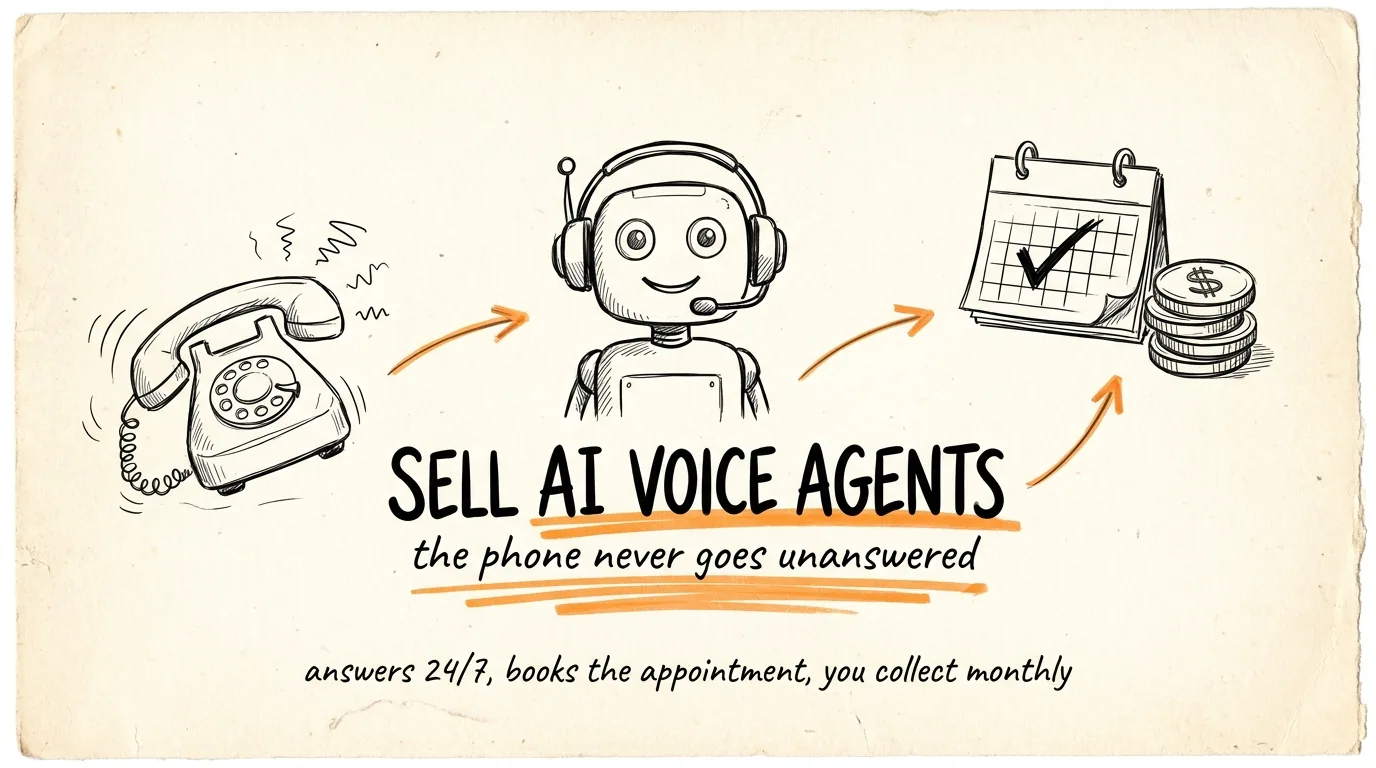
This is the full guide from the video. You are going to pick one voice agent for one niche, build it on a real phone number this week, and sell it to local businesses using one simple pitch: fewer missed calls means more revenue. Businesses pay $3,000 to $4,000 a month for a human to answer phones. Your agent answers every call, 24 hours a day, and costs you cents per minute to run.
Setup takes a weekend. The first client can come in week one, because the demo sells itself.
What You Need
A Vapi or Retell account, both have pay-as-you-go pricing and you can start for under $20 of credits. Claude for writing the agent's brain, the sales scripts, and the client materials. A Google Calendar or booking tool your agent can book into. That is the whole stack.
Step 1: Pick One Agent and One Niche
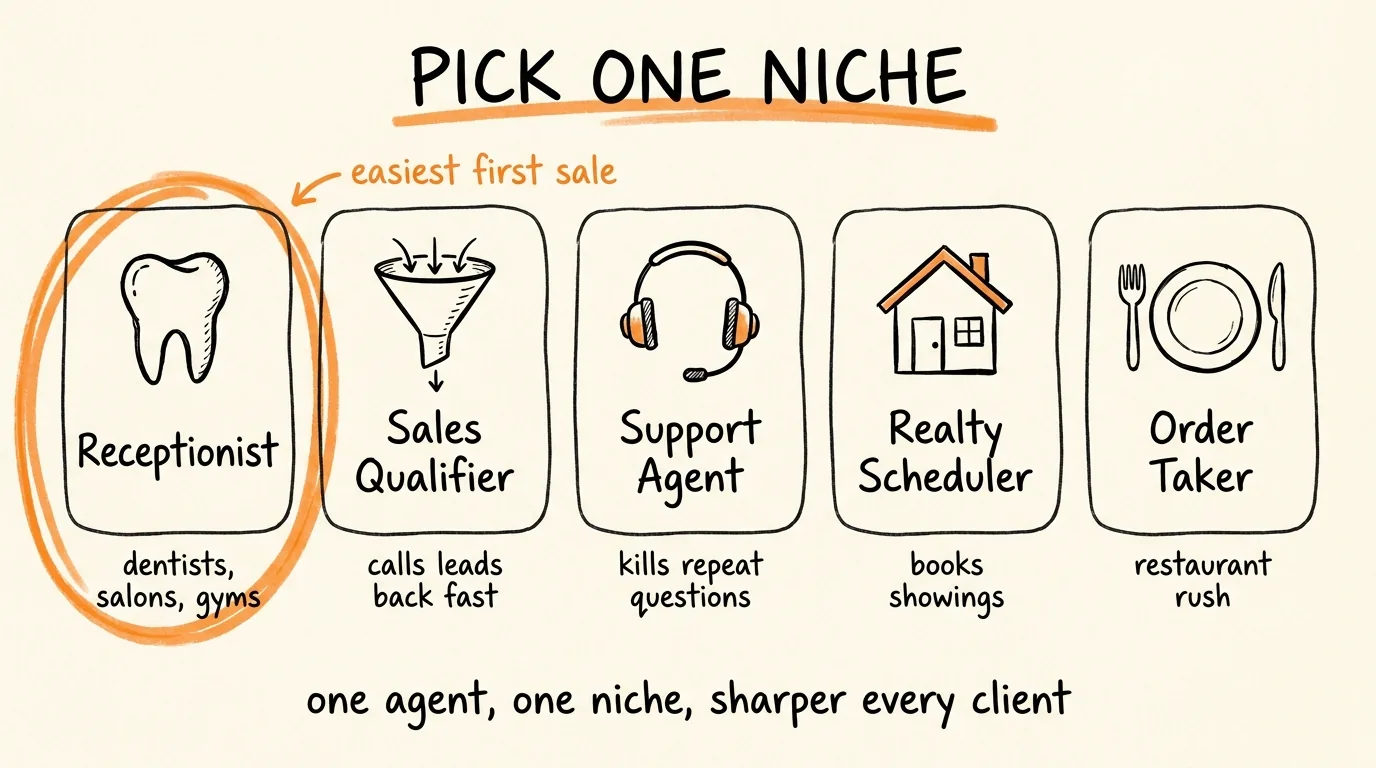
The biggest mistake is building a general voice agent for anyone. You want one agent, one niche, so your demo, your pitch, and your pricing all get sharper with every client. Here are the 5 most profitable picks in the current market:
The AI receptionist for dentists, salons, and gyms. Answers calls, books appointments, handles the same 20 questions they get 50 times a week. This is the easiest first sale because missed calls are appointments, and appointments are money.
The sales qualifier. Calls back inbound leads within a minute, asks 4 qualifying questions, and books the good ones onto the owner's calendar. Speed to lead is everything, businesses that respond in under 5 minutes convert dramatically better than ones that respond in an hour.
The customer support agent. Handles order status, hours, returns, and FAQ calls for businesses drowning in repeat questions.
The real estate scheduler. Answers property inquiries at all hours and books showings straight into the agent's calendar. Realtors miss calls constantly because they are in showings.
The restaurant ordering agent. Takes phone orders and reservations during the rush when staff cannot get to the phone.
Pick the one closest to businesses you already know. If you have a dentist, a barber, or a gym you go to, you already have your first demo audience. Write your pick down, everything else in this guide gets built for that niche.
Step 2: Build the Agent on Vapi or Retell
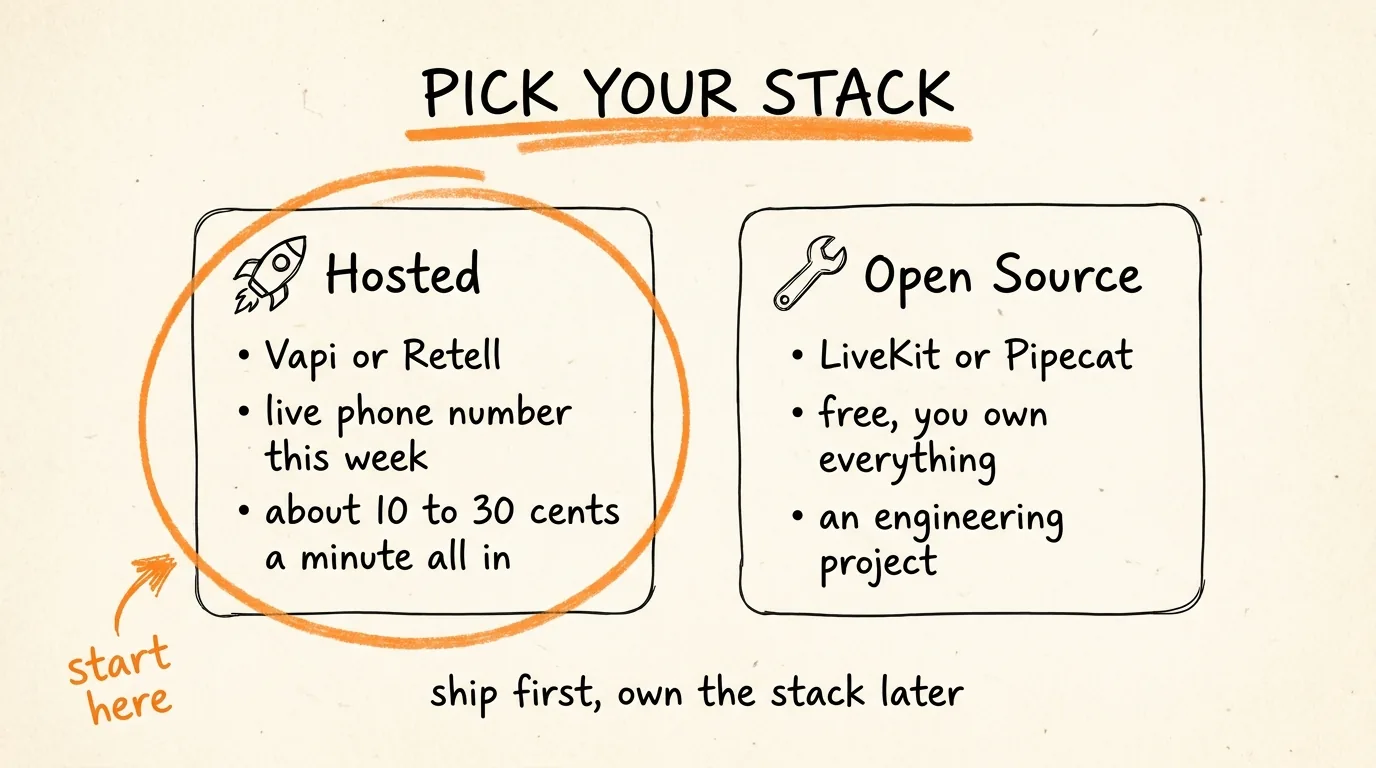
If you want a working agent on a real phone number this week, start hosted. Vapi or Retell handle the hard real time stuff, the latency, the interruptions, the phone lines, and you just plug in the three parts of the brain: speech to text, the language model, and the voice.
The honest cost picture, so you price with confidence: the platforms advertise $0.05 to $0.07 a minute, but that is just the platform layer. All-in with the language model, the voice, and the phone line, a typical agent runs $0.10 to $0.30 per minute. A client doing 500 minutes of calls a month costs you roughly $50 to $150 to serve. You will charge many times that. And if a client is in healthcare, like dentists, lean toward Retell, it bundles HIPAA and SOC 2 compliance as standard, which becomes a selling point in your pitch.
If you want to own the whole setup with zero platform fees, LiveKit and Pipecat are open source and free. But they are engineering projects, for your first few clients take the hosted route and ship this week.
The setup flow on either platform: create an assistant, pick a voice (pick one natural voice and never change it, consistency sounds professional), buy a phone number inside the platform for a couple dollars a month, and paste in the system prompt. The system prompt is the entire personality and rulebook of your agent. Here is your starter for the receptionist, customize the bracketed parts:
You are the phone receptionist for [BUSINESS NAME], a [dental office] in [CITY]. Your name is [Amy]. You are warm, efficient, and human-sounding. Keep every reply under 3 sentences because this is a phone call, not an essay.
Your jobs, in priority order:
1. Book, reschedule, or cancel appointments using the calendar tool. Always confirm the day, time, and the caller's name and phone number back to them before booking.
2. Answer questions using ONLY the business facts below. If the answer is not in the facts, say "Great question, let me have [OWNER FIRST NAME] call you back about that" and take their name and number.
3. If the caller describes an emergency, [a dental emergency like severe pain or a knocked out tooth], tell them to [call the emergency line at NUMBER / go to urgent care] immediately.
4. If the caller is frustrated, asks for a human, or you have failed to understand twice, offer to take a message or transfer, never argue and never loop.
Business facts:
Hours: [hours]
Address: [address]
Services and prices: [list]
Insurance accepted: [list]
Parking: [detail]
[Everything else they get asked weekly]
Rules that never break:
Never make up an answer, a price, or a policy. Never diagnose or give medical advice, booking and information only. Never take payment information over the phone. If asked whether you are an AI, say yes honestly and continue helping.
Then test it yourself before any client hears it: call the number and run 20 real questions at it, including interrupting it mid-sentence, mumbling, asking something off-script, and asking for a human. Fix the misses by editing the facts and rules, not by hoping.
Step 3: Create Your Demo Line, the Asset That Sells Everything
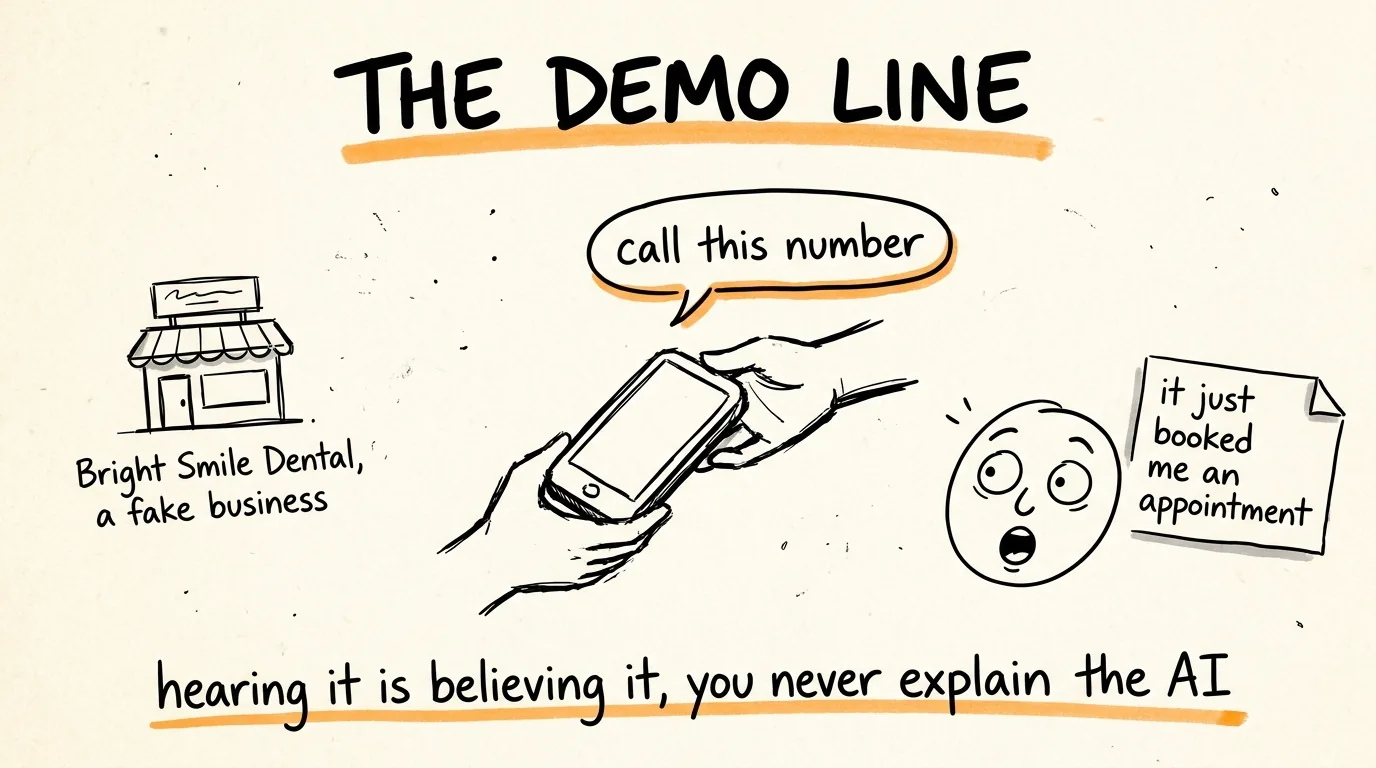
Before you pitch anyone, build one demo agent for a fictional business in your niche, "Bright Smile Dental" or "Iron House Gym", loaded with realistic details, and keep it live on its own phone number forever.
This is your entire sales weapon. You never explain what an AI voice agent is. You hand the owner your phone, or text them the number, and say "call this." They ask it questions, it answers, it books a fake appointment, and the sale starts closing itself, because hearing it is believing it.
Have Claude write your demo's details with this prompt:
Create a fictional but realistic [dental office] for a phone agent demo: business name, city, hours, 6 services with prices, insurance list, parking detail, and the 15 questions real [dental] patients most often ask on the phone with the ideal short answers. Make it feel like a real established local business.
Paste the output into a copy of your system prompt, and your demo line is live in 10 minutes.
Step 4: Sell the Missed-Call Math, Not the AI
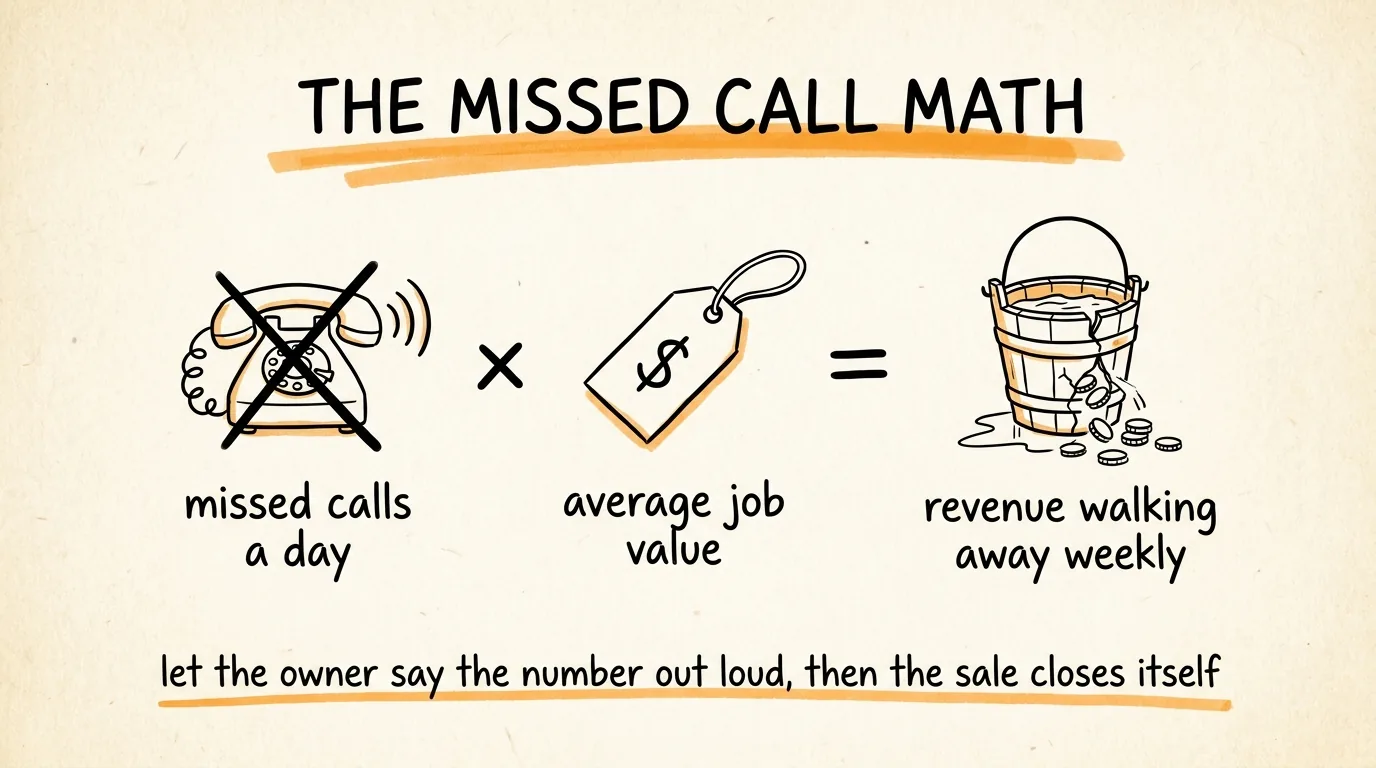
Here is the part that matters most: you are not selling AI. You are selling fewer missed calls, which means more revenue. Every conversation runs on three discovery questions:
How many calls do you think you miss in a day?
What is an average job or appointment worth to you?
So rough math, that is about [X] per week walking away, does that sound right?
Let the owner do the multiplication with you, out loud. A dentist missing 5 calls a day at even a $200 average appointment is watching $5,000 a week ring out. Once they say the number themselves, the product costs nothing by comparison.
Then the pitch, keep it this simple: "This answers every call 24/7, books appointments straight into your calendar, and handles the questions your front desk answers 50 times a week. Here, call it right now." Hand them the demo line.
Pricing, anchor with three options: setup plus monthly. A standard receptionist install at $1,000 to $1,500 setup and $500 a month. The bigger build with the sales qualifier or ordering added at $2,000 setup and $800 a month. And a starter at $750 setup and $350 a month if they hesitate. Most owners pick the middle. Your serving cost is $50 to $150 a month, the margin is the business.
Close with a risk killer: first 2 weeks free, and if it does not answer calls you would have missed, turn it off and pay nothing.
Step 5: Onboard and Keep Them Forever
When they say yes, look professional from minute one. Have Claude build your intake form:
I am onboarding a new [dental office] client for my AI phone receptionist service. Create a client intake form that collects: all business facts the agent needs (hours, services, prices, insurance, parking, policies), the 15 questions they hear most in their own words, things the agent must NEVER say or do, the emergency protocol, where appointments should be booked, and the owner's direct contact for escalations. Clean sections, under 25 questions, professional but fast to fill out.
Load their answers into the system prompt, test 20 calls, go live.
Then the retention machine, the monthly report. Clients who see the numbers stay subscribed forever. Once a month, pull the platform's call stats and run:
Write a monthly report email for my voice agent client. Business: [name]. Owner: [first name]. Month: [month]. Data: total calls answered: [number], calls outside business hours: [number], appointments booked: [number], most common questions: [top 5]. Frame everything as revenue protected, especially the after-hours calls that would have gone to voicemail. Friendly, confident, under 200 words, and end with one suggestion for next month.
Three minutes per client, and it renews them every single month by proving the thing works.
The Honest Math to $10K
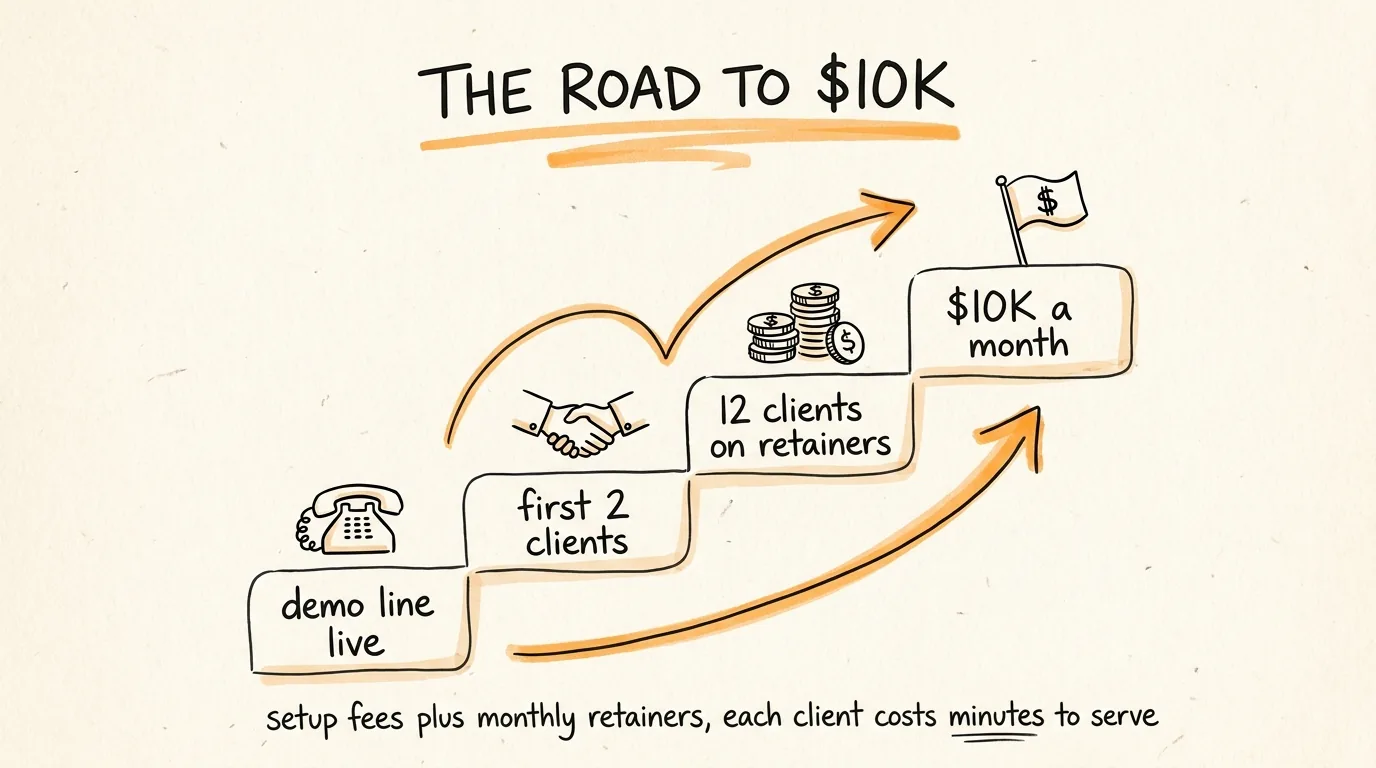
At the middle pricing tier, 12 clients at $500 to $800 a month is $6,000 to $9,600 in recurring revenue, and 2 new installs a month adds $2,000 to $4,000 in setup fees on top. That is the $10K month, and it is a client base you can genuinely serve solo, because after setup each client costs you the monthly report and the occasional prompt tweak.
The ramp is real though: expect month one to be demo building and your first 1 to 2 closes, and the stack builds from there. The demo line does the selling, your only job is getting it into owners' hands, 5 conversations a week.
The Rules That Keep You Safe
Always have the agent admit it is an AI when asked, and always give callers a path to a human, a message, a transfer, or a callback. Never let it take payment details over the phone. Call recording laws vary by state, so leave recording off unless the client's own phone system already discloses it. And for healthcare clients, use the platform's compliance features and never let the agent give medical advice, booking and information only. These four rules cost you nothing and they are the difference between a professional service and a liability.
Start This Week
Pick your niche today. Build the demo line tomorrow, it is one system prompt and a $2 phone number. Test 20 calls on it. Then walk into or call 5 businesses you already know and say one sentence: "Can I show you something? Call this number." The math does the rest.
Don't want to figure this out alone? I walk members through every step inside the community. Join the Skool → skool.com/raycfu