
How to Analyze Any Stock with 5 Prompts
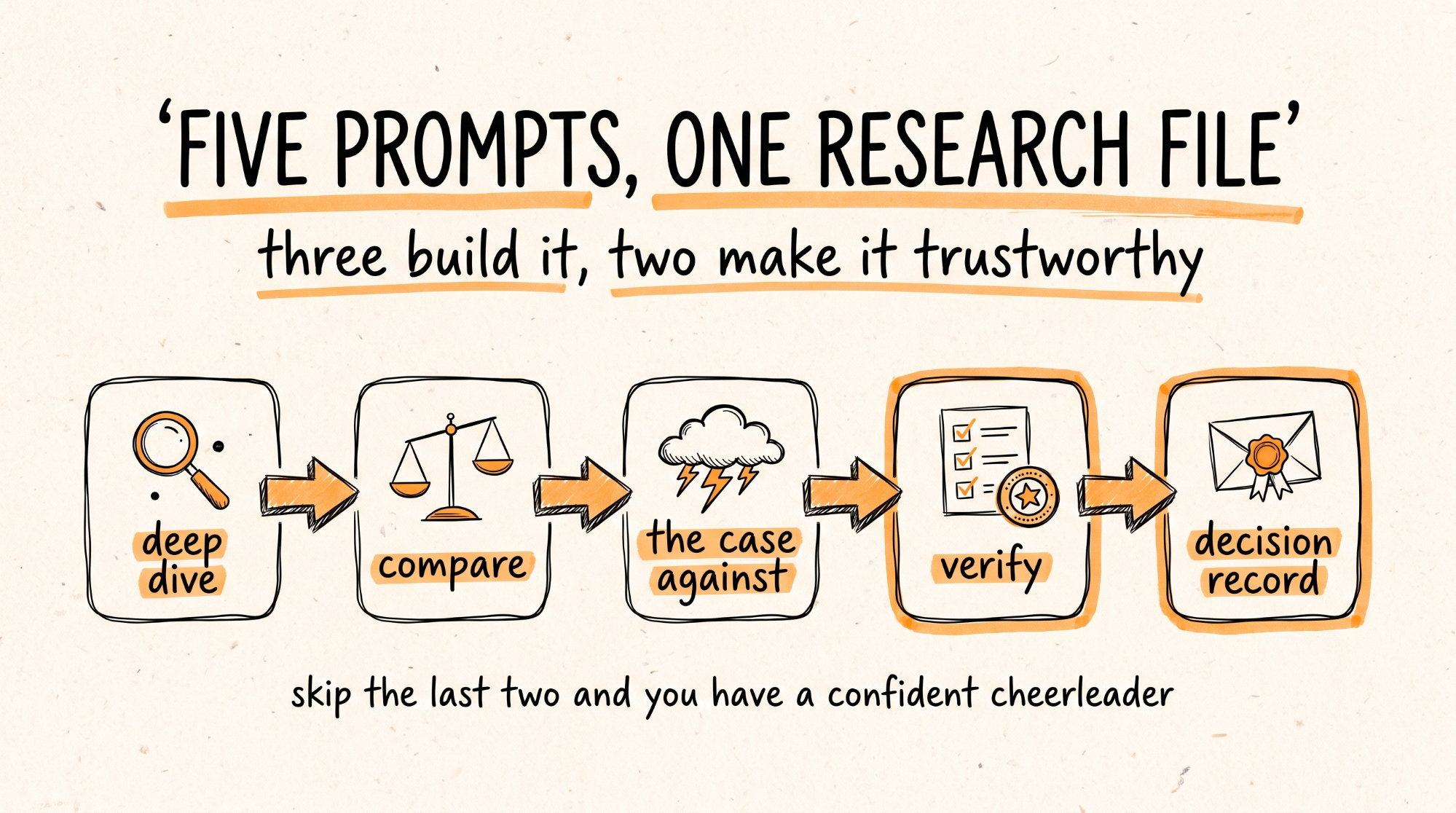
Five prompts that take a ticker and produce a structured research file: a deep dive, a peer comparison, a bear case, a verification pass, and a decision record.
The first three are the framework. The last two are what make the first three trustworthy, and they are the reason this guide is longer than a list of prompts.
Don't want to figure this out alone? I walk members through every step inside the community. Join the Skool → skool.com/raycfu
Before the First Prompt: The Data Problem
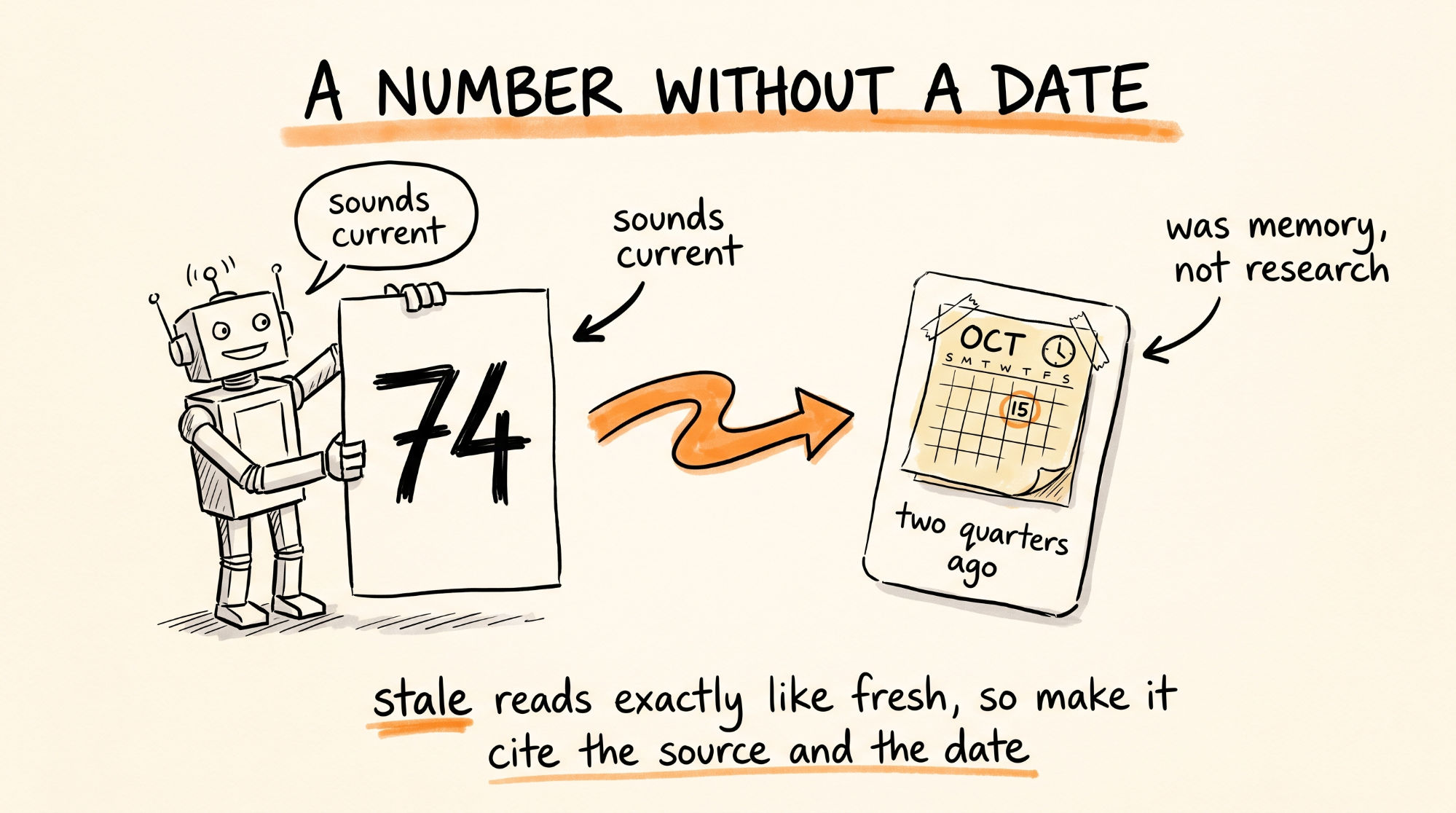
A language model has a training cutoff. Ask it about a company's financials without giving it access to live data and it will answer from whatever it absorbed months ago, in a confident present tense, with no indication that the numbers are stale. A P/E ratio from two quarters back reads exactly like a current one.
So turn on web search before you start, and build the citation requirement into every prompt. That is what the fourth prompt exists for.
The rule for this entire system: any number without a source and a date is not a number, it is a guess that came out formatted like a number.
Prompt 1: The Deep Dive
Do a deep research dive on [TICKER]. Use live sources and cite every figure with its source and the date it was reported.
Cover:
- What the business actually does and where the revenue comes from, by segment and by percentage
- Financial health: revenue growth, margins and their direction, free cash flow, debt, and cash position, with the last 3 years for trend
- The competitive moat, and specifically what would have to happen for it to stop working
- Near-term catalysts, with dates where they exist
- The three biggest risks, ranked
Then score it 1 to 10 on financial health, moat strength, and growth prospects, and explain each score in one sentence.
Rules: cite the source and date for every number. If you cannot verify a figure, write UNVERIFIED rather than using the most recent one you remember. Separate what you found from what you are inferring. Do not tell me whether to buy it.
That last instruction matters. A model asked to evaluate a company will drift toward a verdict, and a verdict from a research prompt is the output people act on without doing the rest.
Prompt 2: The Peer Comparison
Compare [TICKER] against its most relevant competitors: [LIST 2 TO 4].
Build a table with, for each company: market cap, P/E and forward P/E, revenue growth rate, gross and operating margin, free cash flow, and debt to equity. Source and date every cell.
Then tell me:
- Where [TICKER] is genuinely better, genuinely worse, and roughly equivalent
- Whether any valuation gap between them is justified by the fundamentals or not, and say explicitly which parts of that you can support with data versus which are judgment
- What the market appears to believe about each company that the numbers do not obviously support
Do not rank them by which is the better investment. Rank them on each metric separately and let me do the combining.
Comparison is where this framework earns its value. A company evaluated alone always looks like something, because there is no reference point. Against three peers on the same metrics, the story either holds up or it does not.
Prompt 3: The Bear Case
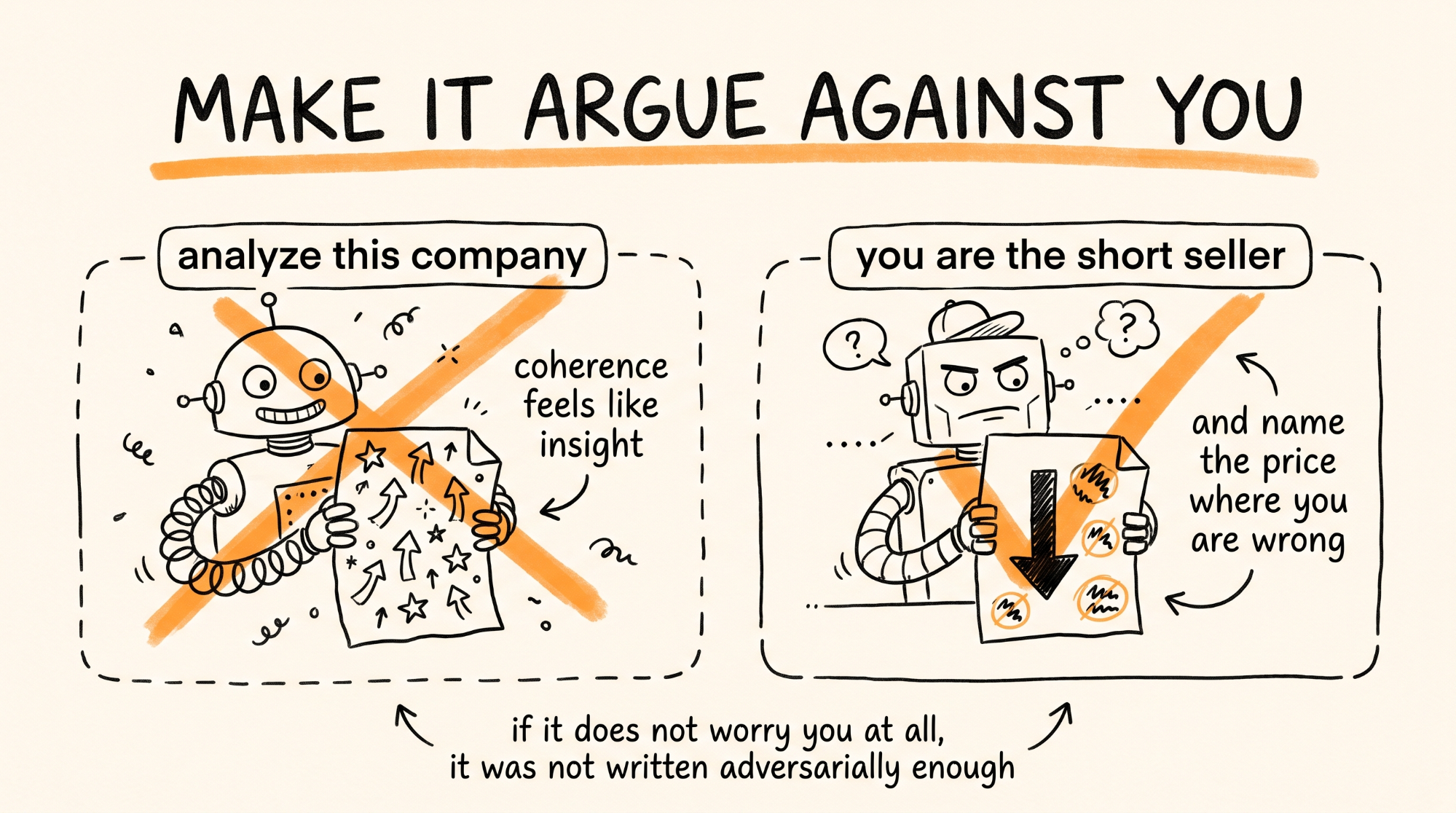
Your video calls this the part most people skip, and it is the right call. Here it is with the teeth it needs.
You are a short seller who has just been assigned [TICKER] and your job is to build the case against it. You have no position and no loyalty to the bull thesis.
Argue the strongest possible case that this is a bad investment right now. Specifically:
- What is the most likely way the bull thesis breaks
- Which parts of the growth story depend on assumptions rather than results
- What competitive, regulatory, or macro risk is being underpriced
- What is in the filings that the enthusiasm skips over
- Who is on the other side of this trade and what do they know
Then give me the specific conditions under which you would be wrong, and a concrete invalidation level: the price or the business event at which the bear case is defeated.
Cite sources. Do not soften anything to be balanced. I have already read the bull case.
The reason this prompt is essential: the first two prompts will produce a compelling story, because a model given a company and asked to analyze it produces coherence, and coherence feels like insight. The bear case is the only step that tests whether the story survives contact with the strongest counterargument.
Read this one twice. If it does not genuinely worry you at all, that is usually a sign it was not written adversarially enough rather than a sign the company is safe.
Prompt 4: The Verification Pass
This is the one nobody runs and it is the reason models lose people money.
Here is the analysis you produced on [TICKER]: [PASTE ALL THREE OUTPUTS]
Now audit your own work as a skeptic with no attachment to it.
For every single number in those three outputs, tell me: the exact source, the date it was reported, and whether you retrieved it live or produced it from memory. Mark each one VERIFIED, STALE, or UNVERIFIED.
Then flag: any figure you cannot source, any claim stated as fact that is actually an inference, any place the three analyses contradict each other, and anything where you expressed more confidence than the evidence supports.
List everything I need to check myself before this influences a decision.
Run this every time. You will be surprised how much comes back STALE, and the numbers that come back UNVERIFIED are exactly the ones that would have been load-bearing.
Then go check the flagged figures against the actual filings. That is the part that cannot be delegated.
Prompt 5: The Decision Record
Based on everything above, write a decision record for [TICKER] that I will re-read in 6 months.
Include: the core thesis in two sentences, the three things that must be true for it to work, the specific evidence for each, the bear case in two sentences, my invalidation level, what I expect to happen and roughly when, and what I am uncertain about.
Do not include a recommendation. Write it so that future me can tell whether present me was reasoning well or just got lucky.
This is the one that actually compounds, and almost nobody does it. The record separates good process from good outcomes, which is the only way anyone improves at this. A thesis you can grade in six months teaches you something. A thesis you only remember the shape of teaches you nothing.
The Test That Will Tell You What This Is Worth
Here is an exercise worth more than the rest of this guide.
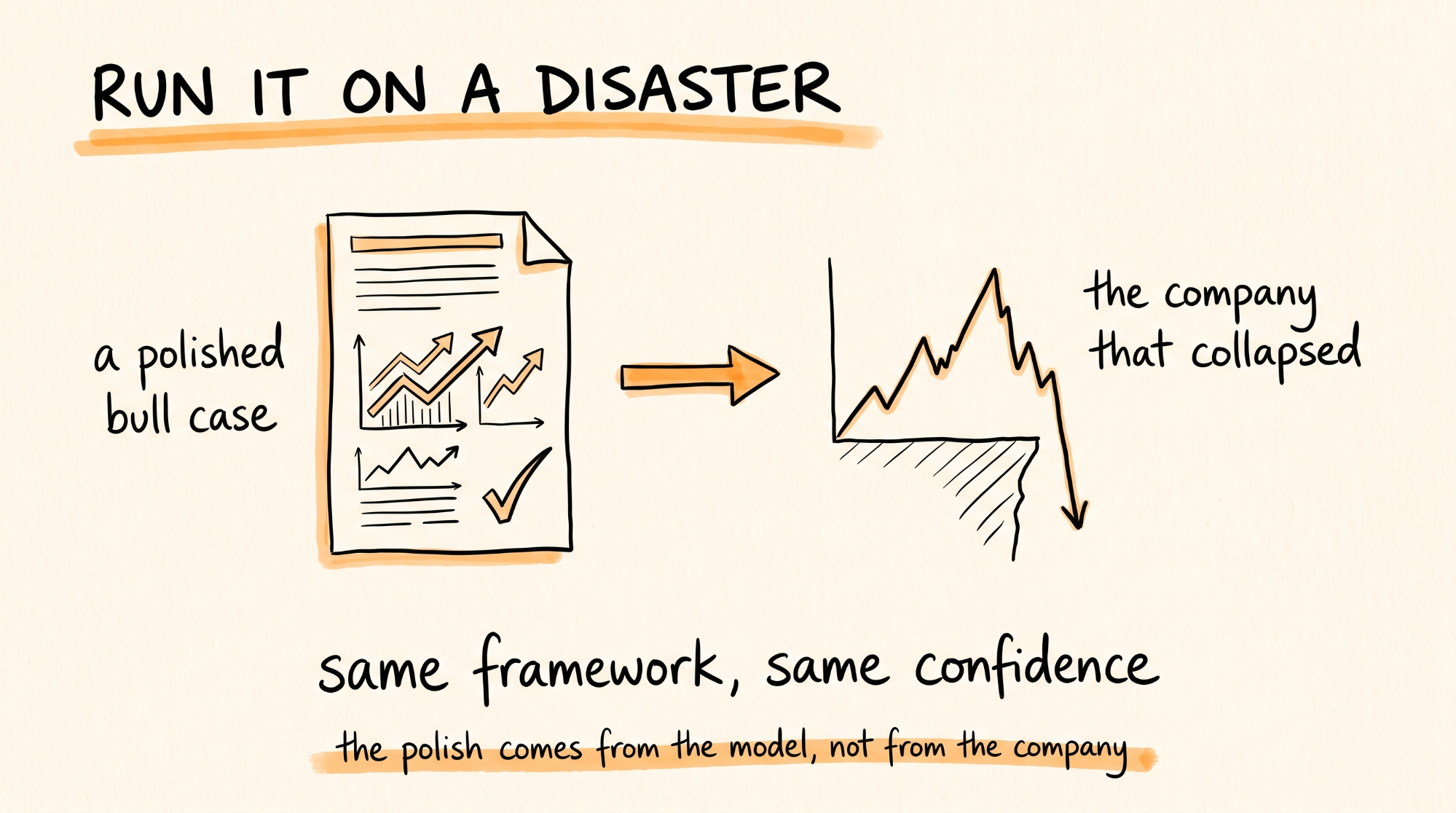
Pick a company whose stock collapsed. Something that was widely admired and then fell hard, where you already know how the story ends. Run prompts 1 and 2 on it, but restrict the analysis to information available before the collapse.
You will get a compelling, well-structured, confident bull case for a company that was about to fall apart.
That is not the framework failing. That is the framework working exactly as designed, and it is the most useful thing you can learn about it. These prompts organize information and surface considerations. They do not know the future, and they will produce equally polished analysis for a winner and a disaster, because the polish comes from the model, not from the company.
Which brings up the survivorship problem in how tools like this get marketed. Pointing at a stock that went up and saying the method caught it proves nothing, because nobody publishes the tickers the same method liked that went nowhere. A method is only worth anything if you have tracked every call it produced, including the boring ones and the wrong ones. If someone shows you two winners and a six-figure number, ask for the full log. Nobody ever has one.
How to Actually Use This
Run all five, in order, every time. Skipping the bear case gives you a cheerleader, and skipping the verification gives you a confident cheerleader, which is worse.
Verify the flagged numbers yourself in the filings before anything influences a decision.
Keep every decision record in one folder and grade them on a schedule. After a year you will know your actual hit rate, which is the only number in this whole exercise that is really about you.
And treat the output as the beginning of your thinking, not the end of it. The genuine value here is that it takes what used to be a week of pulling filings and comparing metrics and turns it into an afternoon of structured reading. That is real leverage. It is not a shortcut around judgment, and the people who treat it as one are the ones who find out expensively.
The Recap
Turn on web search first. Run the deep dive, then the peer comparison, then the bear case with real teeth. Then run the verification pass and go check everything it flags. Then write the decision record you will grade in six months.
Any number without a source and a date is a guess wearing a number's clothes. And a framework that produces a beautiful bull case for a company that later collapsed is telling you something important about what it can and cannot do.
Don't want to figure this out alone? I walk members through every step inside the community. Join the Skool → skool.com/raycfu
IMPORTANT: This guide is for educational purposes only. Nothing here is financial advice. These prompts produce research, not recommendations, and a language model can state a wrong number with complete confidence. Verify every figure against the primary source before it influences a decision. Trading involves real risk of loss and you should never risk money you cannot afford to lose.