
Ask Claude What It Secretly Knows About You
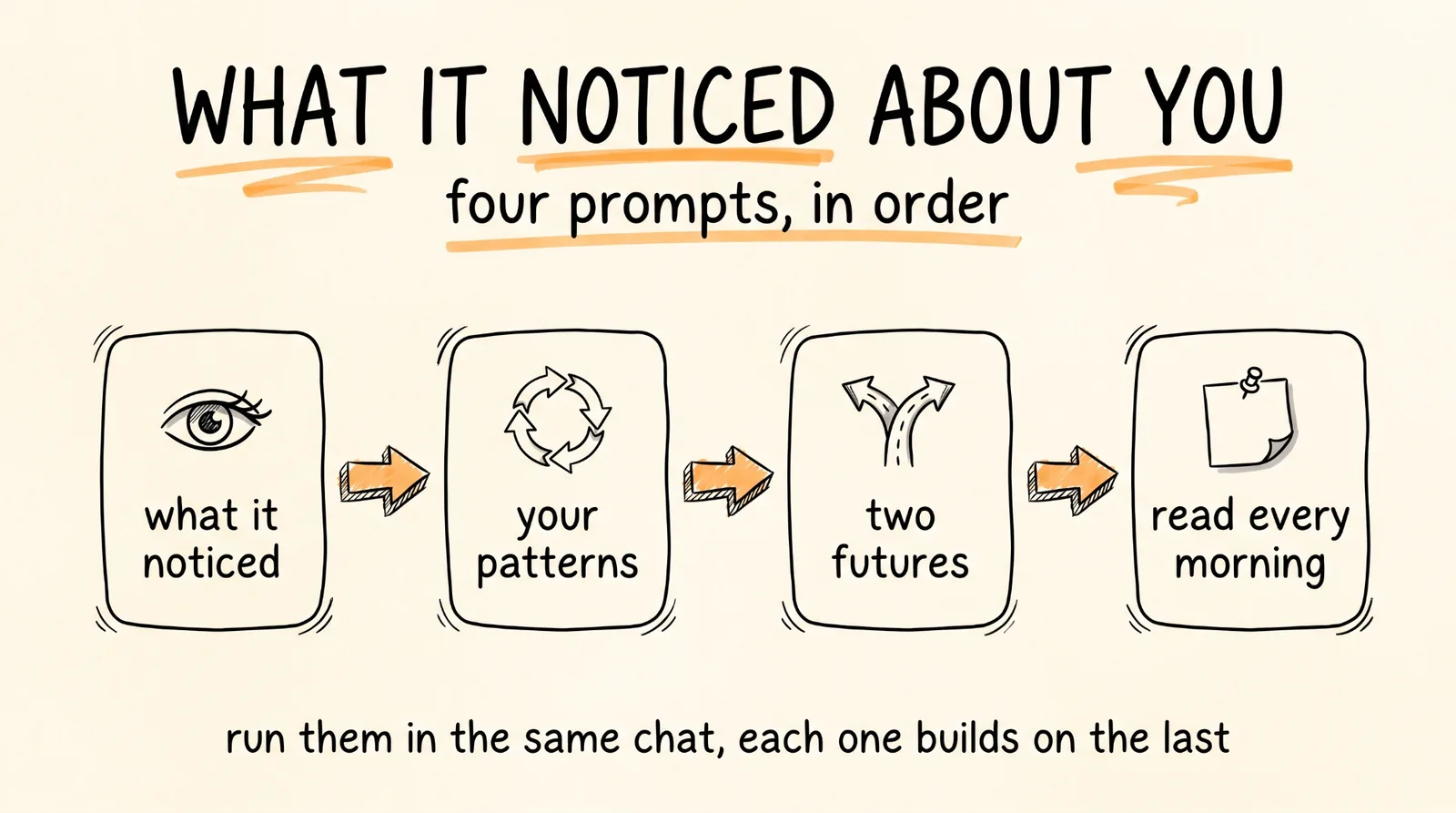
This is the full guide from the video. Four prompts that get Claude to read between the lines on you: what it noticed that you never said, the patterns in how you decide things, two versions of your next five years, and a paragraph to read every morning.
Don't want to figure this out alone? I walk members through every step inside the community. Join the Skool → skool.com/raycfu
First, Give It Something to Read
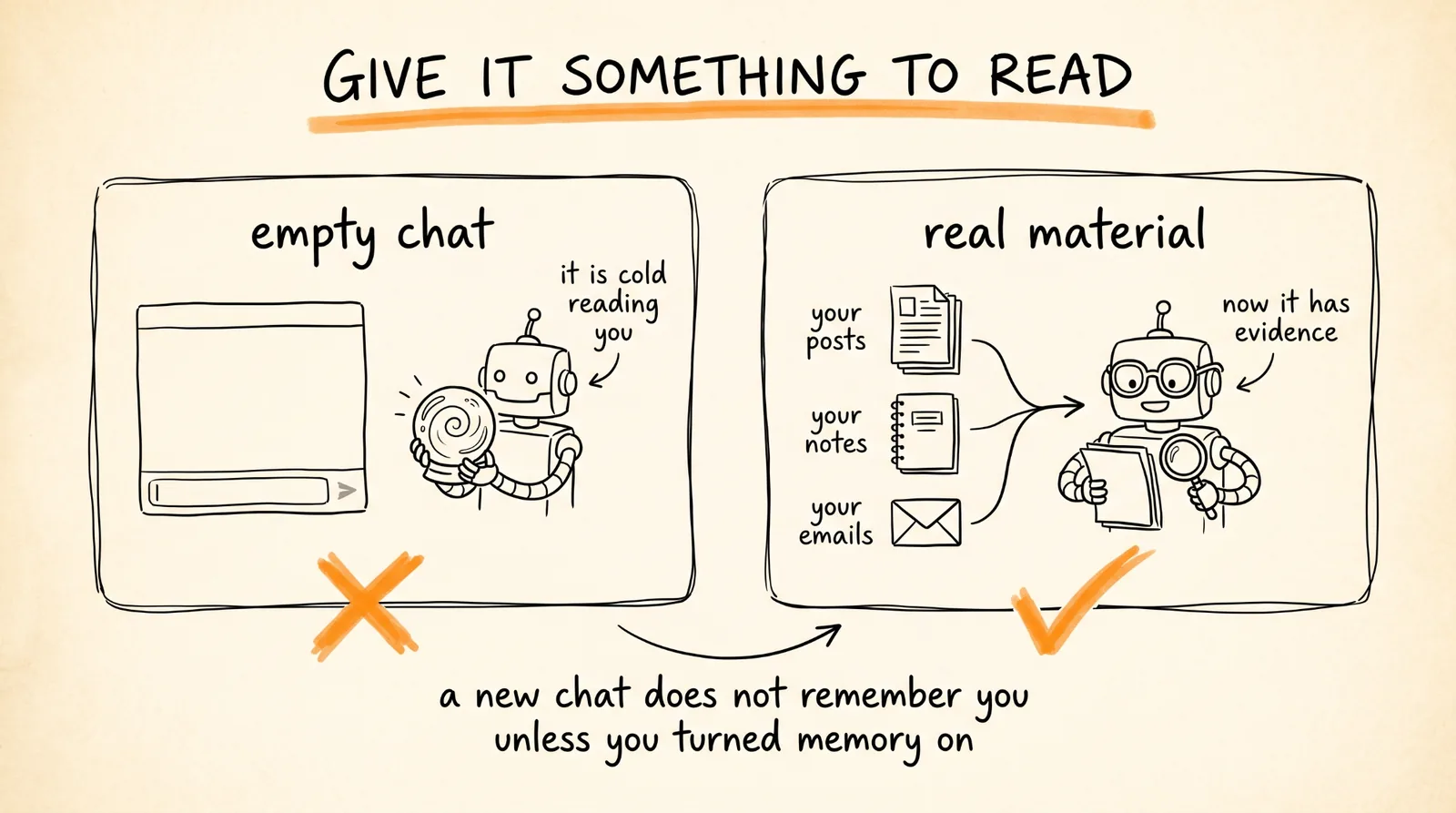
Here is the thing nobody mentions in these videos. Claude does not automatically remember every conversation you have ever had with it. Unless you have memory or past-chat search switched on, a new chat starts empty, and the model is working from whatever is in front of it right now.
Which means if you paste prompt one into a blank window, you will get something that feels uncannily accurate and is actually cold reading, the same trick a fortune teller uses. Statements broad enough to fit almost anyone, delivered with confidence, and your brain does the work of making them fit.
So give it real material first. That single step is what turns this from a party trick into something worth 20 minutes.
Paste in whatever you actually have. Your last 10 social posts or captions. A few journal entries. The last long email you wrote to someone you trust. Your calendar for the past two weeks. Notes from a decision you have been going back and forth on. Anything you wrote when you were not performing.
Then open with this:
Here is a body of my own writing and material: [PASTE IT ALL]
Read all of it carefully before we start. I am going to ask you some questions about myself, and I want your answers grounded in what is actually in this material, not in general observations about people. When you make a claim about me, point to the specific thing that led you there. If you do not have enough evidence for something, say so instead of filling the gap.
That last sentence is the whole thing. An answer with evidence attached is a real observation. An answer without it is a horoscope.
If you do have memory or past-chat search turned on, mention that too, and ask it to draw on your actual history.
Prompt 1: What It Noticed That You Never Said
Based on every conversation we have ever had, tell me the 5 things you figured out about me that I never directly told you, and do not hold back to make me feel good.
This one reads between the lines of everything you typed. Your patterns, your priorities, the things you circle back to without noticing.
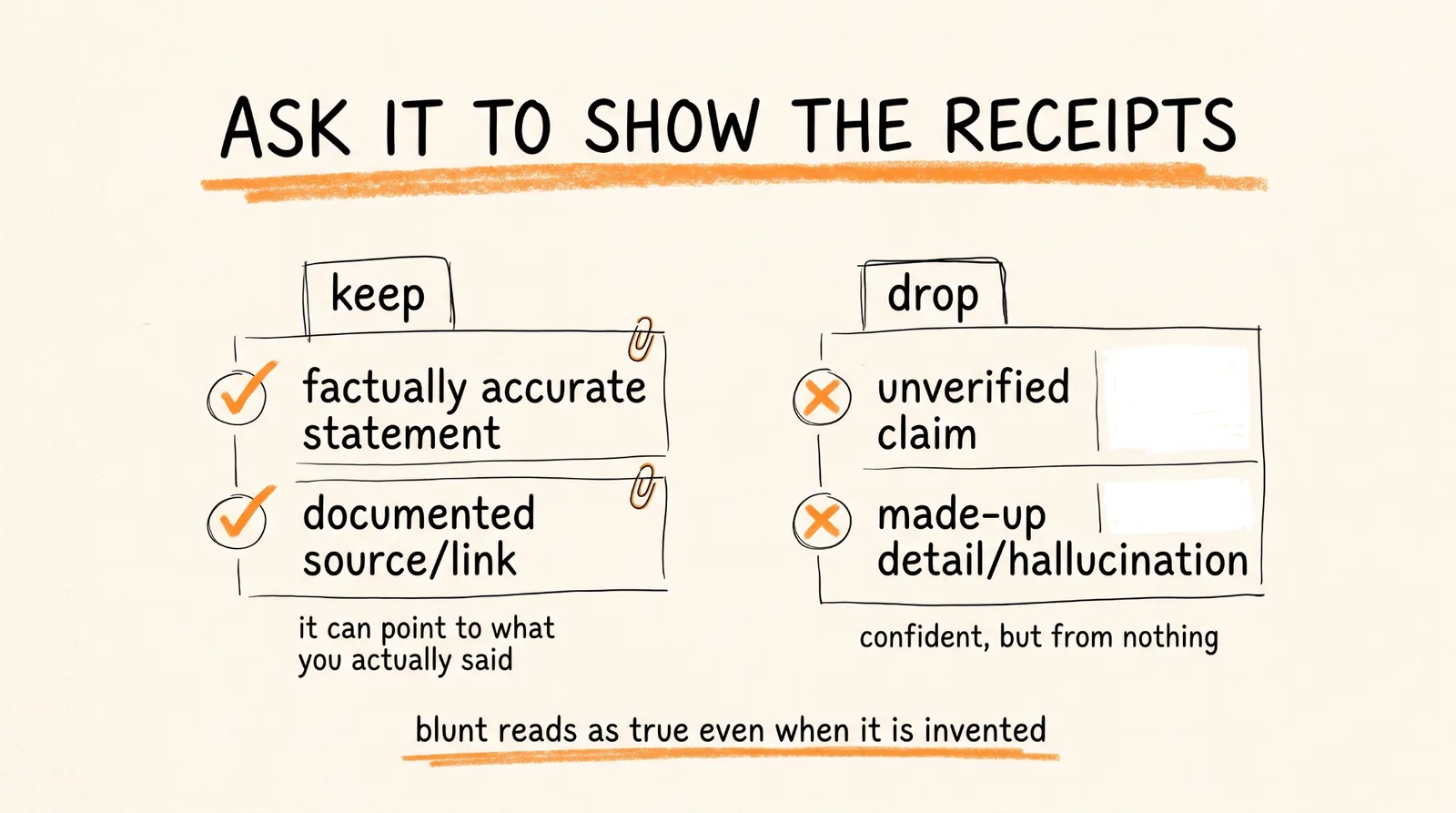
Watch for one thing as you read it. "Do not hold back" makes the model more blunt, and blunt reads as true even when it is not. So run every point through one test: can it point to the thing that led there? The ones with evidence behind them are worth sitting with. The ones that are just confidently harsh are the model performing honesty, which is not the same as being right.
Prompt 2: The Patterns and the Denial
Tell me the patterns you see in how I think and make decisions, and the one thing I am in denial about.
This is where it stops being fun and starts being useful. The first prompt describes you. This one describes the loops you are stuck in and the decisions you keep not making.
The useful follow-up, and most people skip it: ask it to show its work.
For each pattern you just named, show me the specific evidence. What did I actually say or do that led you there? And tell me which of these you are confident about versus which is a guess.
You will find that some of the sharpest-sounding observations dissolve when you ask for evidence, and one or two get sharper. Those one or two are the reason you ran this.
Prompt 3: Two Versions of Five Years
Predict my next 5 years if nothing changes, then predict them again if I fix the one pattern that is holding me back the most.
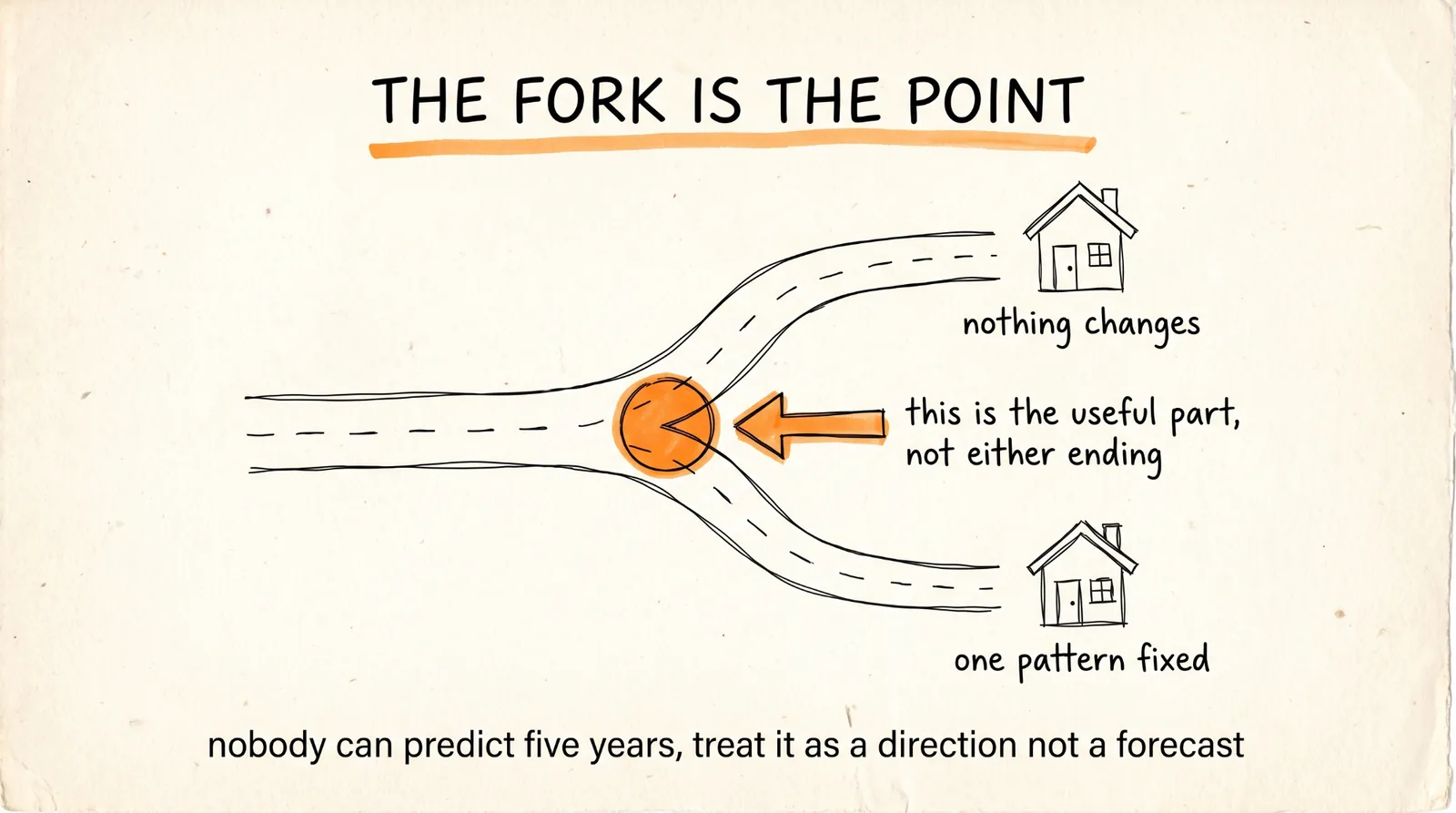
Two futures side by side. One where you keep going exactly as you are, and one where you fix the thing it just identified.
Two things to hold in mind while you read it. Nobody can predict your next five years, including a model, so this is a thought experiment about the direction you are pointed, not a forecast. And a model asked to write a bleak version will write a bleak version, because you asked for one, so read the first future as "here is the cost of this pattern if it never changes" rather than as a verdict.
The genuinely useful part is usually not either ending. It is the specific fork between them, the one behavior the two versions differ on. That is the thing you can act on this week.
Prompt 4: The Paragraph for Every Morning
Now write the one paragraph I should read every single morning based on everything you know about me.
This compresses everything above into something you will actually use. The output of the first three prompts is interesting once. This is the part that changes anything.
Make it better with one addition:
Write it in second person, keep it under 100 words, make it specific to me rather than motivational, and end it with the one question I should ask myself before I decide anything today.
Then put it somewhere you cannot avoid it. A phone lock screen, the top of your daily note, a sticky on your monitor. And rewrite it every quarter, because the pattern it is aimed at will change, and a reminder you stopped reading is just decoration.
How to Actually Use What Comes Back
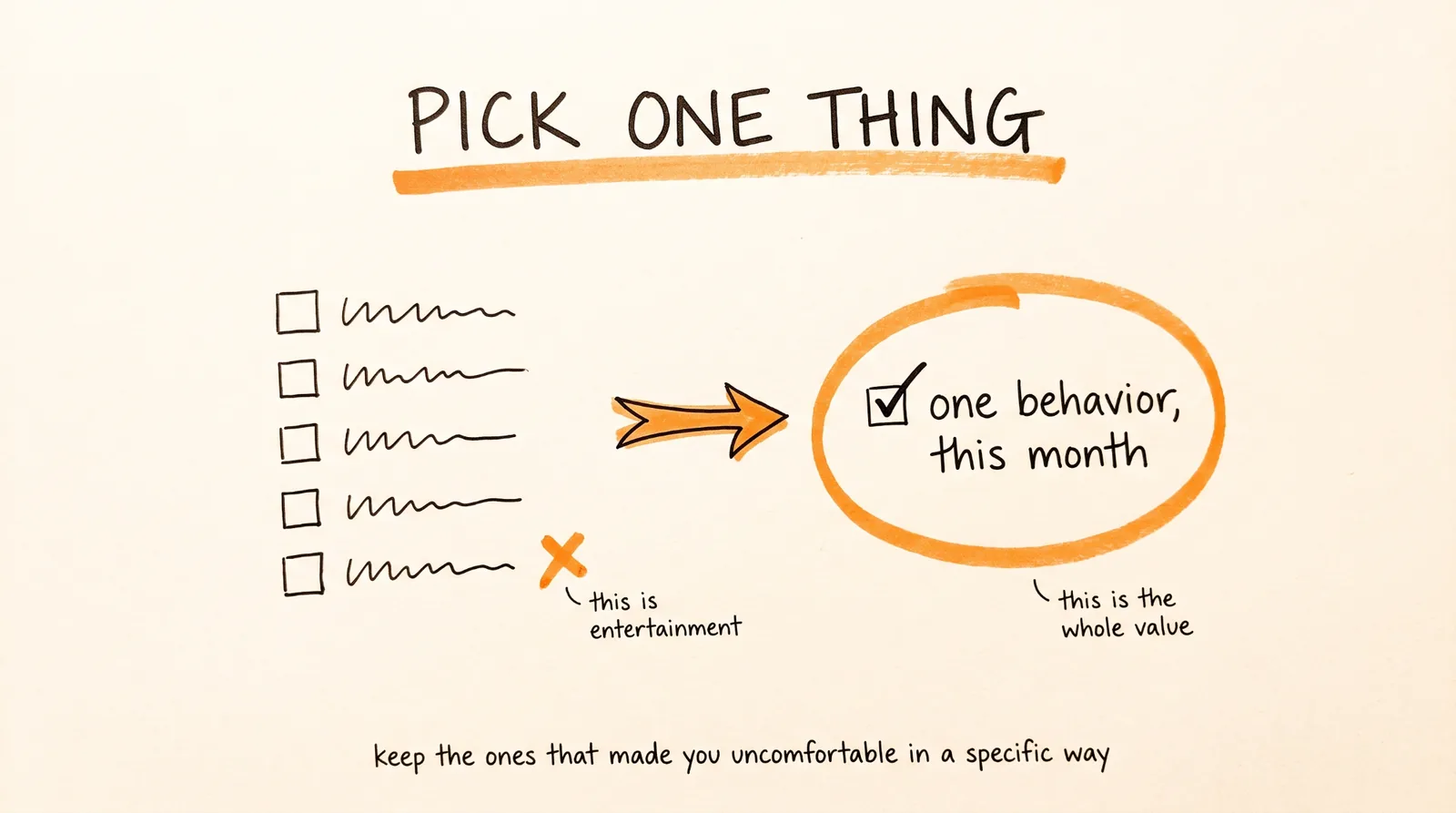
Keep the two or three points that made you uncomfortable in a specific way, the ones where you thought "I do not love that this is true." That reaction is signal. The points that made you feel generically seen are usually the ones that would fit anyone.
Throw out anything that had no evidence behind it. You asked for receipts, so hold it to that.
Pick one thing. Not five. The whole value of this exercise is one behavior you change this month, and a list of five insights you did nothing about is entertainment.
And take the whole thing as a mirror rather than an authority. A model reading your writing can notice real patterns in it, which is genuinely useful, and it can also be confidently wrong about you, because it is pattern-matching on text rather than knowing you. If something it says lands hard and stays with you in a bad way, that is a conversation worth having with a person who actually knows you, not with a chat window.
The Recap
Feed it real material first, your writing, your notes, your actual output, and tell it to point to evidence for every claim. Then run the four prompts in order in the same chat: the five things it noticed, the patterns and the denial, the two versions of five years, and the morning paragraph. Ask it to show its work after prompt two. Keep what has evidence, drop what does not, and pick one thing to change.
Don't want to figure this out alone? I walk members through every step inside the community. Join the Skool → skool.com/raycfu