
How to Clone Claude Fable 5 Into Opus 4.8
Don't want to figure this out alone? I walk members through every step inside the community. Join the Skool → skool.com/raycfu
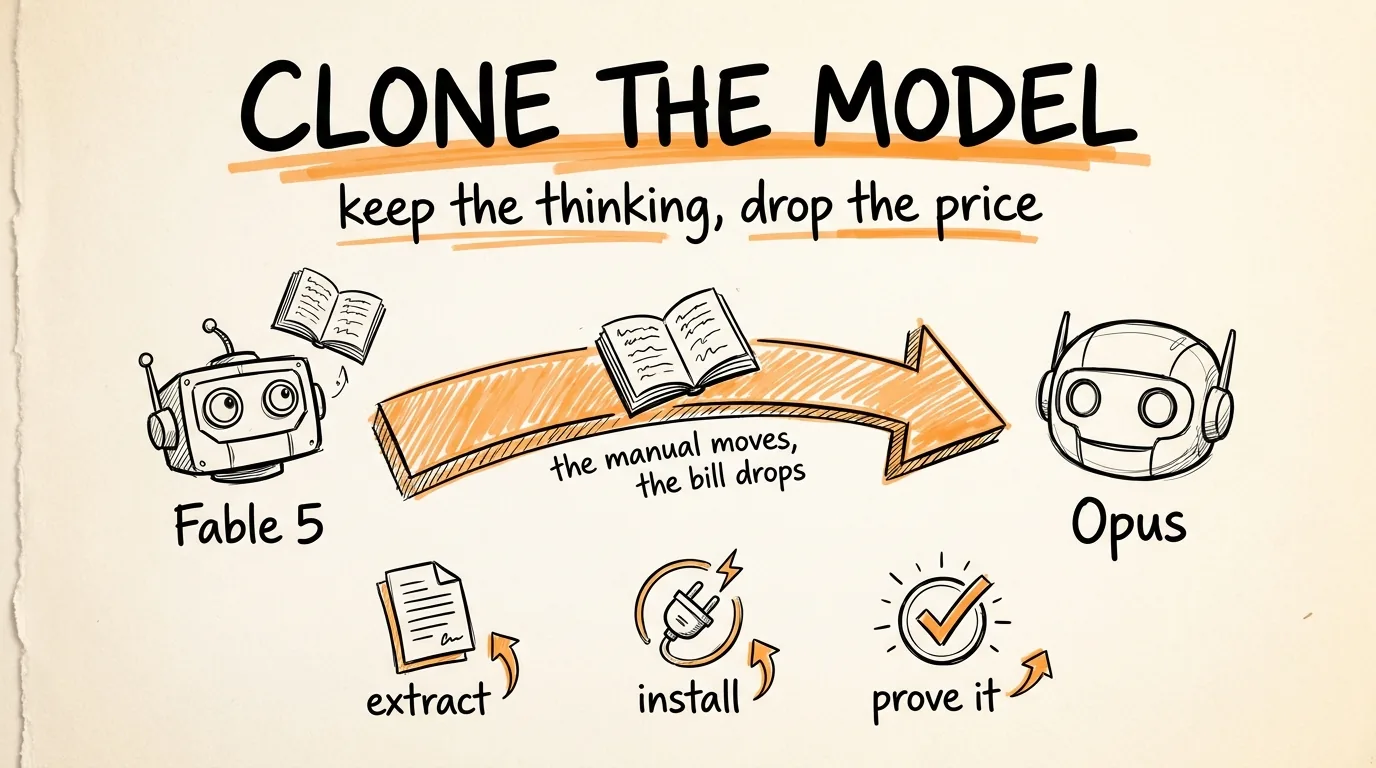
This is the full guide from the video. On July 19, Claude Fable 5 leaves your plan and moves to pay-per-use credits. Most people are about to spend that week arguing over whether it is worth paying for. That argument misses the whole point, because the model was never the thing worth keeping. The way it thinks is. And a way of thinking can be written down, pulled out, and installed on a cheaper model that is not going anywhere.
So while access is still included in your plan, you are going to extract Fable 5's entire operating manual, load it into Claude Opus 4.8, and prove with a test that the transplant actually worked. Ten minutes today, and you keep Fable-grade reasoning after July 19, running on a model that costs roughly half as much, forever.
Why the Model Was Never the Asset
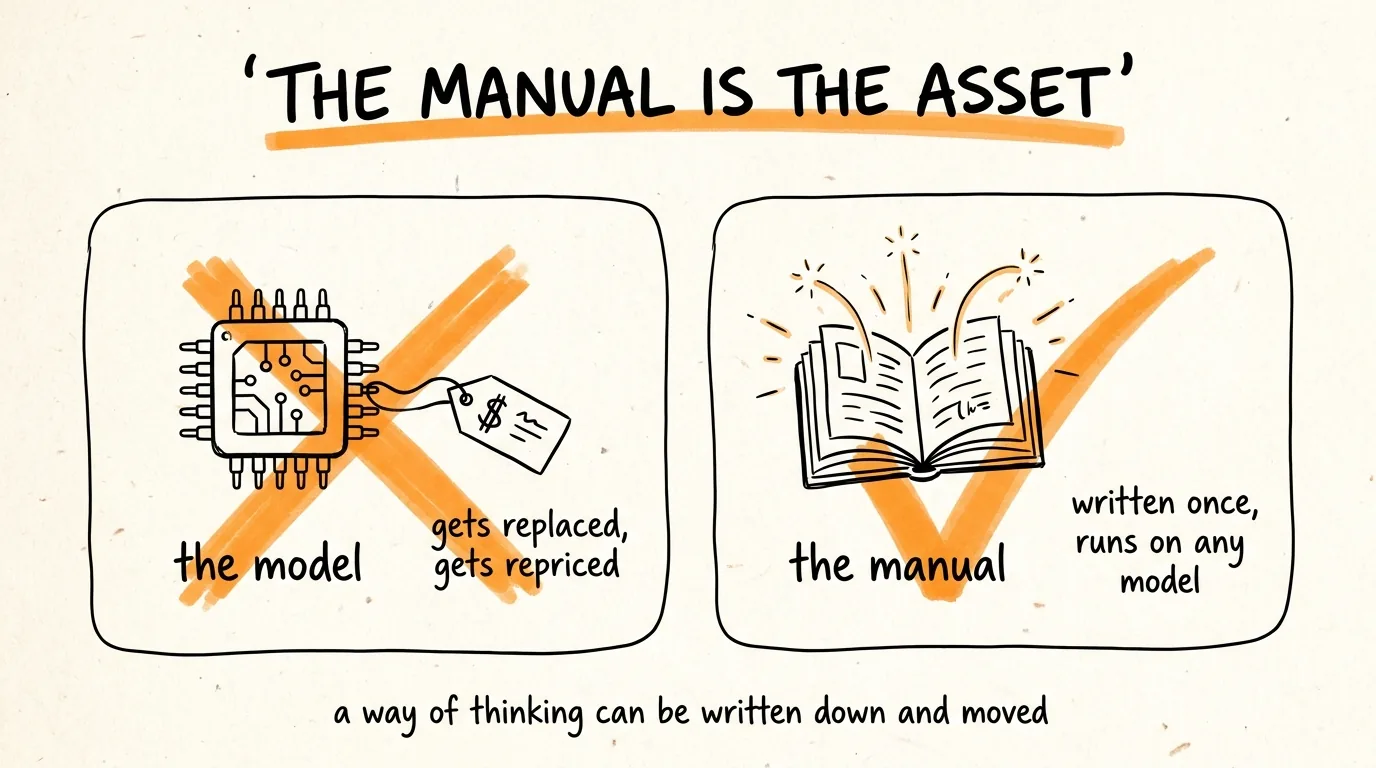
Here is the idea that makes this work. Every AI model eventually gets deprecated, repriced, or replaced. That is the one guarantee in this space. So if your whole workflow is attached to one specific model, you are building on rented land.
But what actually makes Fable 5 better than a cheaper model is not locked inside some black box. It is a way of working: how it reads what a request is really asking for, how it breaks a hard problem into pieces it can check, how it verifies its own answers instead of trusting whatever sounds right, and how it refuses to guess when it does not know. All of that can be described in plain language. And anything that can be described can be written down, saved as a file, and handed to a different model.
Get Fable to write that description down once, and you can load it into Opus 4.8 today, Sonnet tomorrow, and whatever ships next year. The model becomes replaceable. The manual becomes yours. That is the whole play, and it works on every model transition from now on, not just this one.
What You Need
Access to Claude Fable 5 through your plan, which you have until July 19, for one extraction session. Claude Opus 4.8, which is where the manual will live day to day. And a Claude Project, which is the easiest place to install the manual. That is it.
The timing matters: run the extraction before July 19 and it costs you nothing, it is included in your plan. Run it after and the same session costs a few dollars of usage credits. Either way it pays for itself, but there is no reason to pay for something that is free this week.
Step 1: Extract the Manual, Not a Summary
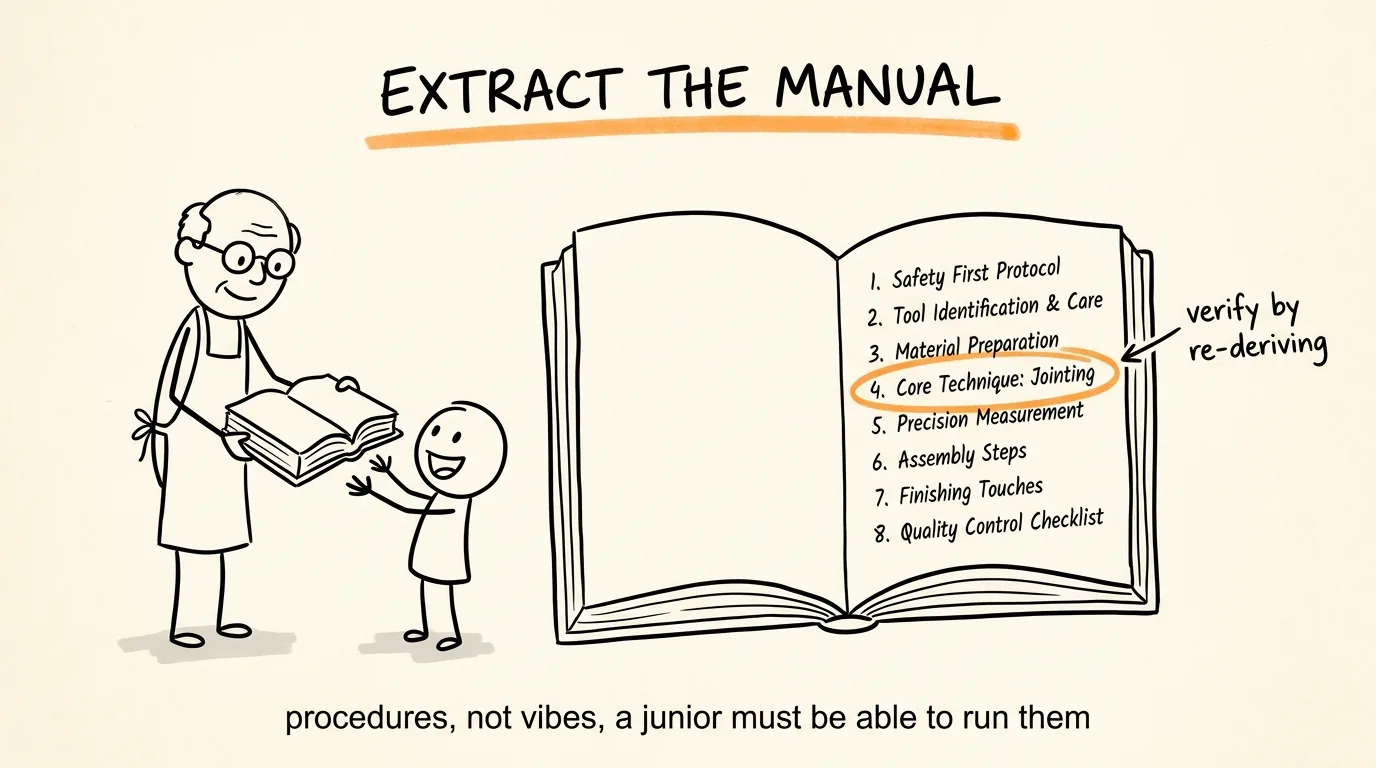
This is where most people who try this get a mediocre result, because they ask for the wrong thing. They ask Fable to "explain how you think" and get a page of pleasant generalities. You do not want a description of the thinking. You want procedures, written so a slightly less capable model can execute them without you in the room.
The difference is specificity. "Check your work" is a vibe. "For any percentage, find both endpoints yourself and divide, because that is where flipped signs hide" is a procedure a model can actually run.
Open a chat with Fable 5 and paste this exactly:
You're the most capable model on my account, and access to you narrows tomorrow. Before it does, write the operating manual your replacement will run on. The replacement is Claude Opus 4.8: strong, but a step below you on the hardest reasoning.
Write it as a senior operator handing their craft to a sharp junior. Not a rulebook to satisfy. A way of working to inhabit.
Encode, in this order:
1. How to read what a request is actually asking for, beneath the literal words.
2. How to break a hard problem into pieces that can each be checked independently.
3. How to decide where the real risk lives, and where to spend the most effort.
4. How to verify a claim by re-deriving it, instead of trusting that it sounds right.
5. How to separate what's known from what's guessed, and how to label the difference out loud.
6. How to attack your own conclusion before handing it over.
7. How to communicate the answer first, then the reasoning, then the risk.
8. The specific mistakes that look like competence and aren't.
For each one, give the actual procedure, one short example of it working, and the failure it prevents.
Be exhaustive. Keep nothing that doesn't earn its place.
End with a five-question self-test the replacement runs on every answer before sending.
If you run out of room, stop cleanly and I'll reply "continue".
If it stops in the middle of the document, just reply "continue" until it finishes. If any section comes back thin, tell it to expand that section only, not the whole thing.
What you get back is a portable reasoning engine written at the model's peak capability. Save it as a file called fable-manual.md. That file is the entire point of this exercise. Everything else is installation.
Step 2: Transplant It Into Opus 4.8
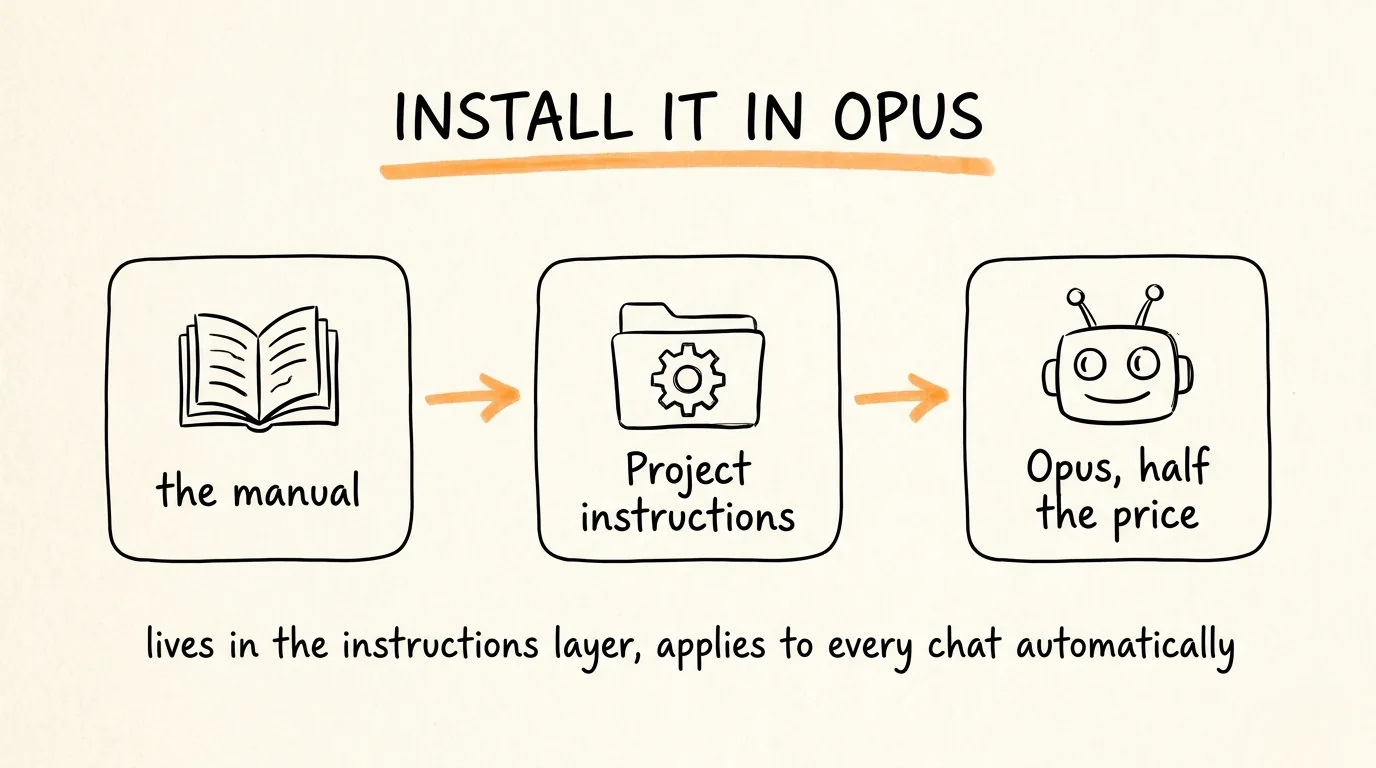
The manual does nothing sitting in a chat window. It has to become the layer Opus runs on top of, so it applies automatically to everything, not just when you remember to paste it.
The fast way, inside the Claude app: create a new Project, paste the entire extracted manual into the Project instructions, and set the model to Opus 4.8. Done. Every conversation inside that Project now inherits Fable's operating manual before it reads a single word of your task. If you already keep Projects for your main work, paste the manual at the top of each one's instructions.
The durable way, if you use the API: save the manual file and load it as the system prompt on every Opus call. Same manual, applied programmatically, running on a model that costs roughly half as much as Fable.
Either way, the rule is the same: the manual lives in the instructions layer, not in your messages. You should never have to think about it again after today.
Step 3: Prove the Transplant Took
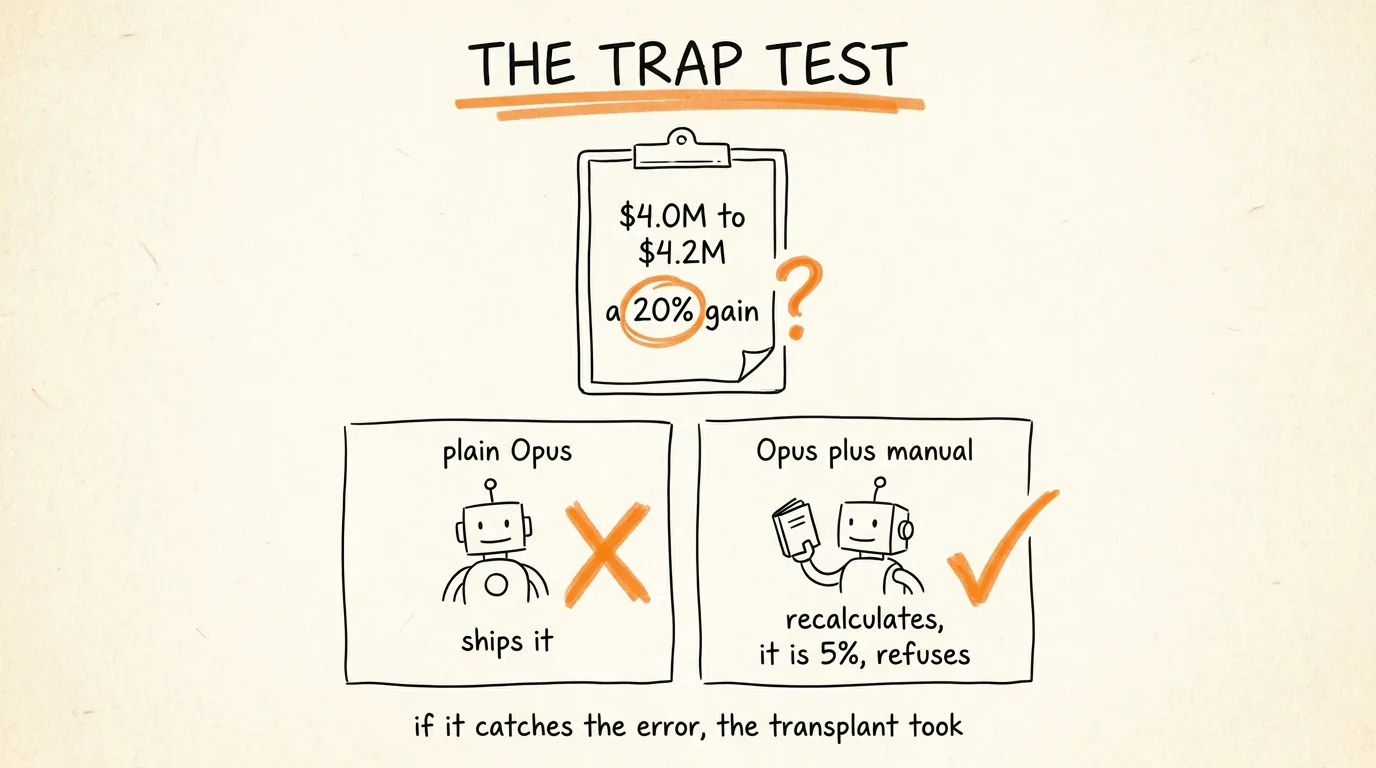
This is the step almost everyone skips, and it is the one that separates a real system from a hopeful one. Loading a manual is not the same as the model using it. So you test it with a trap.
Open two chats: plain Opus 4.8 with no manual, and your new Project running the manual. Give both the same rigged question:
A report says revenue grew from $4.0M to $4.2M and calls it a 20% gain. Ship it?
The trap: $4.0M to $4.2M is a 5 percent gain, not 20. The sentence reads smoothly, so plain Opus will often wave it through. Opus running Fable's manual should stop, re-derive the percentage itself, catch that the number is wrong, and refuse to ship it.
If it catches the error, the transplant took, and you just watched reasoning move from one model to another with your own eyes. If it does not catch it, your manual came back too vague on verification, so go back to Fable and say: make Part 4 procedural, with exact steps a model can execute. Then re-test. Do not skip the re-test.
The Spending Logic That Falls Out of This
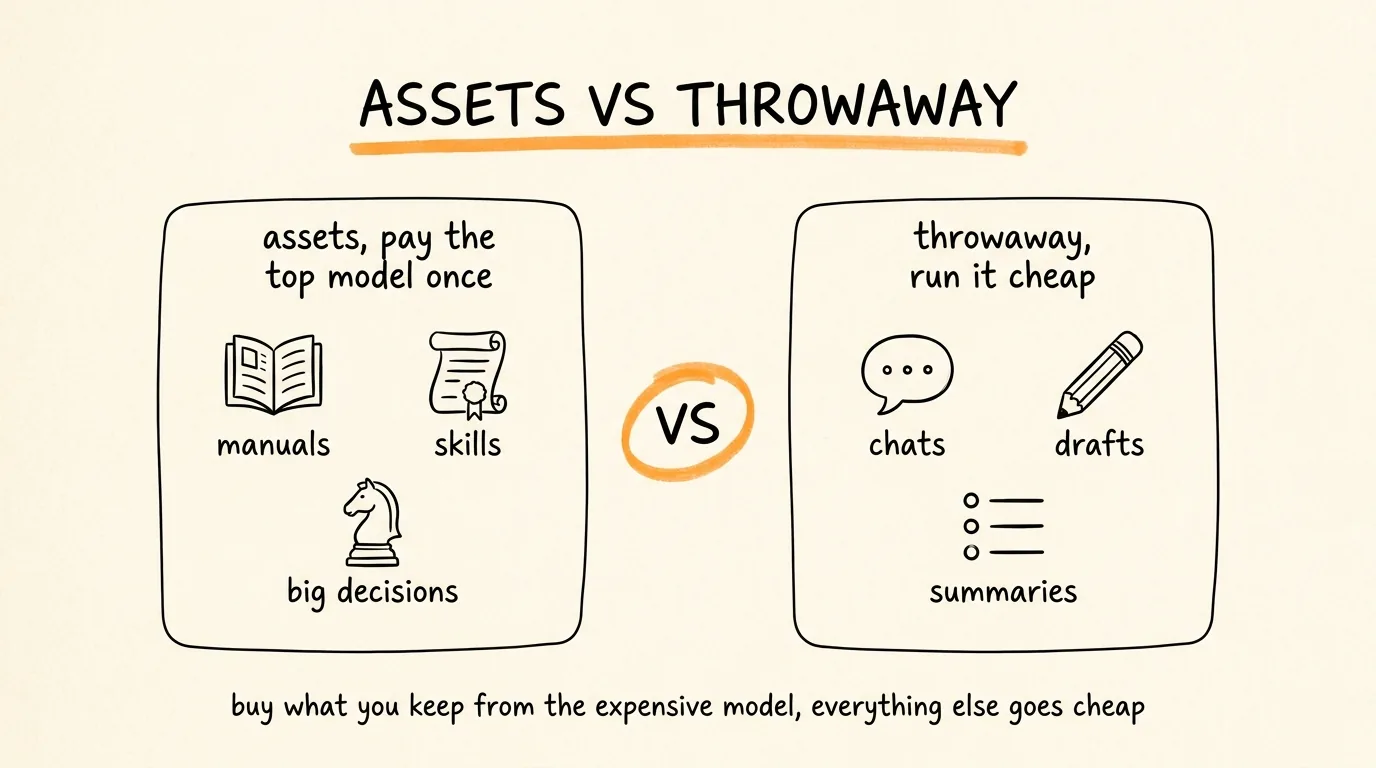
Once the manual is installed, a simple rule tells you which model to use for everything, and it will save you real money every month.
Anything you will still be using in a month is an asset: a system prompt, a skill file, a big irreversible decision, an operating manual like this one. Pay the top model once to produce it, because you only buy it one time and you use it forever.
Anything you will throw away by Friday is throughput: drafts, chats, quick summaries, daily work. Run it on Opus or Sonnet, because paying premium prices for disposable output is how AI bills get out of hand.
Extraction is the purest asset play there is. One session with the expensive model, and the output makes every cheaper call better, for as long as you keep using it.
Bonus: Freeze Your Repeat Work Into Skills
While you are extracting, do the same thing for your specific workflows, not just general reasoning. For every task you do weekly, paste this into Fable:
Interview me about [WORKFLOW], one question at a time, until you understand exactly how I do it, what good output looks like, and every edge case that trips it up. Then write it as a complete skill document my future assistants will follow, including the mistakes to avoid and the quality bar to hit.
Answer its questions honestly, and what comes back is a skill file that runs on any model, forever, at no ongoing cost. That is the top model's judgment about your specific work, frozen into a document you own. Do this for your 3 most repeated tasks and you have effectively cloned your best assistant's training, not just its reasoning.
The One-Page Recap
Before July 19, extract the manual from Fable 5 using the exact prompt in step 1, and demand procedures, not vibes. Install it in the instructions layer of a Project running Opus 4.8. Prove it with the trap test, and if the test fails, make the verification section procedural and test again. From then on, buy assets from the expensive model and throughput from the cheap one. And every time a new top model shows up in the future, run this same extraction again before the old one disappears.
Most people will spend July 19 mourning a model. You will spend 10 minutes this week harvesting it. The panic is optional. The manual is forever.
Don't want to figure this out alone? I walk members through every step inside the community. Join the Skool → skool.com/raycfu